Hour 3 | 1700 - 1200 BCE

The Late Bronze Age · Shang Dynasty · Origin of Chinese Characters · Legend of Atlantis · Minoans · Mycenaeans and the Minotaur · Kingdom of Kerma · Poverty Point · Pyramids in Louisiana · The Austronesian Expansion · The Longest Open-Ocean Voyage · What Makes “A People?”
Browse the main books, articles, lectures, and interviews we relied on to make this episode.
Note: We’ve added links throughout the SYNOPSIS which are not our official sources. We’ve linked pictures, maps, encyclopedia entries, etc for you to enjoy if you want to see the things we are discussing, or get a quick reminder of people, time periods, concepts etc (what is an australopithecine again??). For our official sources check out the BOOKS, ARTICLES, INTERVIEWS, and LECTURE tabs.
The world in 1700 BCE was a tapestry of diverse cultures. Many people were living in small nomadic communities and many people were living in giant empires. It was the height of what historians refer to as the Bronze Age. We will take a world tour to the Shang Dynasty in China, the Minoans on the island of Crete in the Mediterranean, the Kerma civilization in Sudan, Poverty Point in the United States, and the Austronesian Expansion across Islands Southeast Asia. We’ll see pools of wine, volcanoes, minotaurs, shipwrecks, ringing rocks, epic ocean voyages, and pyramids in North America!
Collapse of the Xia Dynasty and the oracle bones of the Shang Dynasty
We get the story of the corrupt, depraved King Jie and his pool of wine from the Lienü Zhuan (Exemplary Women of Early China). This was written during the Han Dynasty by a scholar named Liu Xiang. Interestingly very similar stories are told about Shang dynasty King Zhou Xin.
The Shang Dynasty.
The script on the oracle bones is related to modern Chinese scripts.
Transfer of a dynasty and the Mandate of Heaven.
Was this Mediterranean volcano the cause of the weather disruptions referenced in the Bamboo Annals?
Minoan civilization on the island of Crete
The island later believed by the Greeks to be the birthplace of Zeus.
Shipwreck carrying goods from all over the bronze age world.
Scientists use ice cores and tree rings to date the Volcano. Here is a news article covering the same info.
The iconic Minoan frescos are found as far as Egypt.
Their script, linear A, remains mostly undeciphered.
The culture seems to center around a giant palace at Knossos.
Images of bulls are common in Minoan art. Example, example, example, example, example.
Like many other “myths” the world over, the story of King Minos and the Minotaur has threads of historical reality woven through it.
The Mycenaeans used the writing system of the Minoans to write their own language. This is referred to as Linear B.
Kingdom of Kerma in Nubia.
Ancient rock art in Sudan shows cattle played a vital role in ancient Nubian cultures.
Copper use in Kerma.
Many pictures of the Deffufas of Kerma here. The Deffufas likely served as the religious centers of the city.
Watch beginning at 5:30 to see the rock gongs. Another video of rock gongs - these are in Nigeria.
Poverty Point is a UNESCO world heritage site.
The largest of the works at Poverty Point is the pyramid known as Mound A.
New studies shed light on the engineering of the mounds.
Clay balls were used to heat underground ovens. These “Poverty Point Objects” or PPOs are the only artifact that seems to have traveled away from Poverty Point.
Austronesian Expansion out of Taiwan.
The Austronesian Language family covers half the globe.
The voyage from Luzon to the Mariana Islands was the longest trip out of sight of land humans had ever taken.
Ancient paintings of sea turtles in the Mariana Islands.
Within the larger Austronesian geographical area, a smaller area becomes known as the Lapita culture.
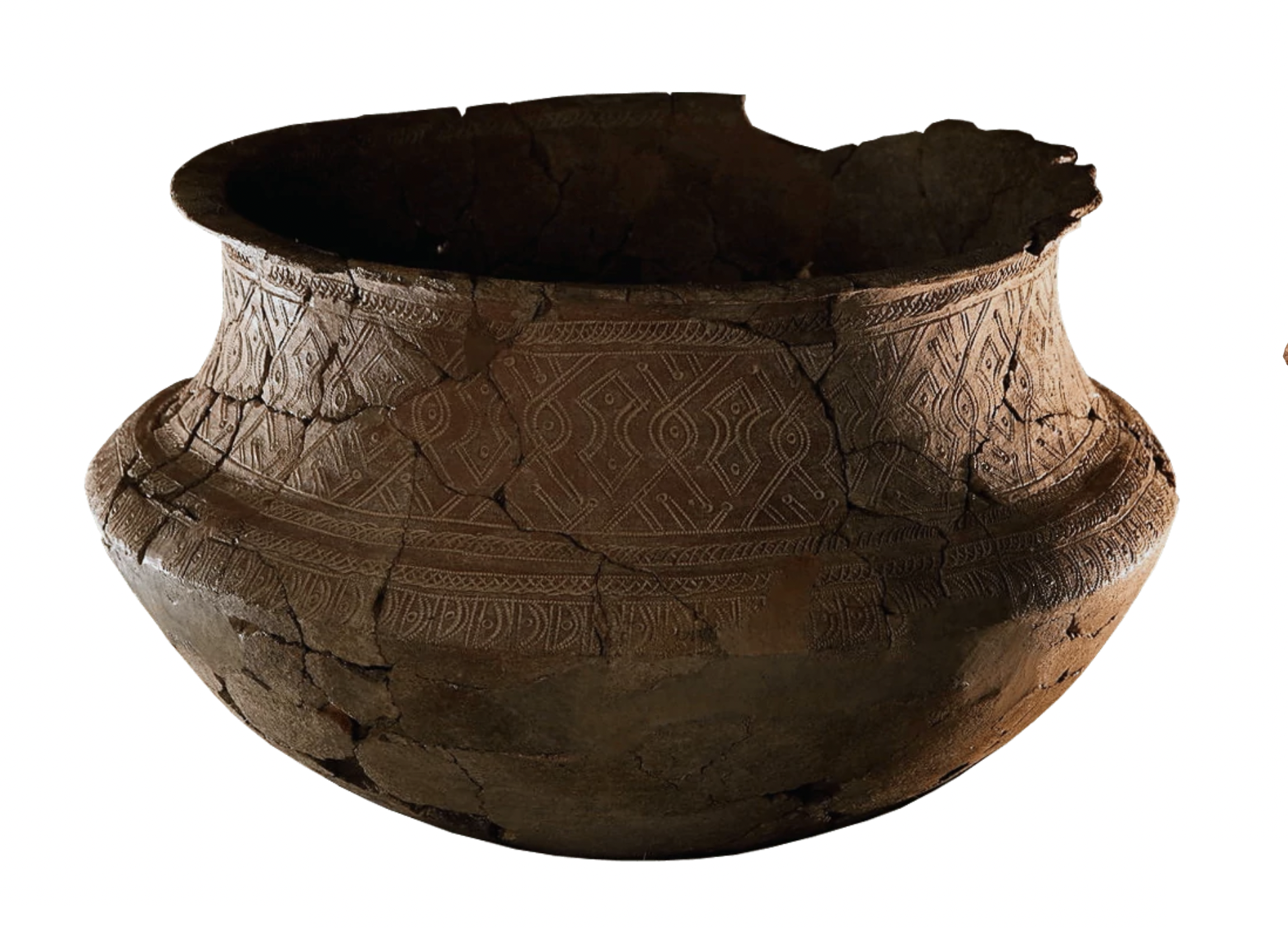
Among other principle artifacts, they are known for their red slip pottery. Otherexamples here.
Two neat tools for comparing country sizes. We are so incorrectly programed by our flat maps!


Nature, “Discovery of a Tsunami Deposit from the Bronze Age Santorini Eruption at Malia (Crete): Impact, Chronology, Extension”
Publication Name, “Ancient DNA Sheds Light on the Peopling of the Mariana Islands”
Science Direct, “Copper at Ancient Kerma: A Diachronic Investigation of Alloys and Raw Materials”
Southeastern Archeology, “Multi-method Geoarchaeological Analyses Demonstrates Exceptionally Rapid Construction of Ridge West 3 at Poverty Point”
Tides of History, “Human Sacrifice, Oracle Bones, and Shang China: Interview with Professor Rod Campbell”
Tides of History, “Ancient Nubia and the Kingdom of Kush Interview With-Dr. Geoff Emberling”
Tides of History, “The Polynesians and the Pacific: Interview with Professor Patrick Vinton Kirch”
The Ancients, “The Legacy of the Minoans”
-
(Edited slightly for clarity)
Charlie: Welcome back to World History 24, where my older sister Ellie teaches me world history in order in just 24 hours. My name is Charlie. In our last episode, we discussed the five cradles of civilization when people in Iraq, Peru, India, Egypt, and China began organizing themselves into large cities and groups of cities with social hierarchies. Although, as we discussed, ‘The Five Cradles of Civilization’ is an imprecise and problematic phrase, we borrowed its framework to look at this early phase of world history.
In this episode, we cover from 1700 to 1200 BCE, sometimes called the Late Bronze Age, and Ellie takes us on a world tour to China, the Mediterranean, Kerma, Poverty Point, and islands Southeast Asia. We'll see pools of wine, volcanoes, Minotaurs, shipwrecks ringing rocks, epic ocean voyages, and pyramids in North America. So without further ado, let's call Ellie and continue the magnificent story of human history.
Charlie: Episode 2 left off in 1700 BCE. Where are we going to start in Episode 3?
Ellie: So we're going to start right there, right in 1700 BCE. And the first thing that I want to do is just the layout, a picture of how the world looks at this point in history. In 1700 BCE. Over the earth, more and more people are living in cities. More and more people are reading and writing. They're organizing themselves into hierarchical structures with monarchs at the top. Big parts of the world have become intricate webs of cities and city states. Some of them have started conquering each other and ruling each other, which create the early–, you know, create early empires. In lots of the rest of the world, also, people are not living in cities and they're not organizing themselves that way. What's important to know is that people living outside of cities and outside of these quote ‘civilizations,’ have complex cultures that don't look like each other’s. So they still have specific ways of living that vary widely from their neighbors, specific ways of living. So they have different styles of pottery, they have different rituals around birth or marriage or death, they live in different types of housing, they eat different types of foods, speak different languages. In the whole world, lots and lots of people are eating almost entirely cultivated foods. Lots and lots of people are eating almost entirely wild foods. Most people eat a mixture. And so what we're going to do in this episode is just take a tour around the Earth and look at how the events unfolded between 1700 and 1200 BCE.
China
Charlie: Cool. Where do we start then? Who's who's the first on our tour?
Ellie: We are going to start exactly where we left off in our last episode in China in the Xia dynasty. And the Xia dynasty if you remember is that dynasty that is semi mythical, semi real that begins the cycle of dynastic China.
Charlie: Right.
Ellie: So it ends. The dates vary, but it ends roughly around 1600 or 1700 BCE. It's traditionally given the solid date of 1766, but you know. That that's very specific.
Charlie: And we're not really sure.
Ellie: Yeah, and we don't know. And then those dates move a lot.
Charlie: OK.
Ellie: This dynasty that replaces it is called the Shang Dynasty, and it's interesting for 1000 reasons and we don't have much time. So I'm just gonna go to the heart of it, which is to say that this is the dynasty that we get the Oracle bones from. And the Oracle bones are this fascinating artifact that we found that come from this tradition of: writing a question on a bone, putting it in a fire, the bone then cracks, and then somebody interprets the cracks as the answer to your question.
Charlie: Ok
Ellie: And that's coming from your ancestors or whoever.
Charlie: ok
Ellie: So what's really interesting is that the vast majority of the Oracle bones that we have are from the very elite, like they're from the Emperor, you know, saying like “will the Queen have a boy” or whatever that type of question. And so I heard this Chinese archaeologist and historian Rod Campbell describe it as though the information we have from the Oracle bones is as though we only have the nightly prayers of the US presidents. To give us the history of the past 100 years. Like these–, just so interesting! Like, I just think that's so cool, like just these intense, like what matters to me questions. But we don't really have any context for them. So it's very like, it's just very unique. But the other reason that they're really important and cool is because they're sort of the earliest version we have of Chinese characters that continue on like they look very, very different, but they're like linguists can tell that they're related to later Chinese characters. So that's cool.
Charlie: That's very cool. It seems also very notably different from the sort of day-to-day, more mundane writing that we have from Summer, for example.
Ellie: Yeah, yeah. And we don't have those examples of writing, but that could be just because they didn't preserve in the archaeological record.
Ellie: So the Shang dynasty is interesting for a million reasons. Like we said, the it's not totally clear with some of these early dynasties how much control they actually had over the surrounding countryside. There's this old Chinese proverb that's “the sky is high and the emperor is far away.”
Charlie: Nice
Ellie: And I think that is especially true with these old dynasties. It's not totally clear if you were just a farmer living way out in the countryside if you would have felt a lot of solidarity and allegiance to the capital cities.
Charlie: Right.
Ellie: You know, so just who, who really knows exactly what the politics looked like. But nevertheless, that's, you know, that's the next dynasty of China. And we're gonna jump backwards though, to the transition from the Xia Dynasty to the Shang Dynasty.
Charlie: OK. Right. Around like 7. When when did you say that was?
Ellie: Yeah, like maybe 16-17 hundred, somewhere in there. The date jumps around a lot, but traditionally, so it's the 17th emperor. Who's this guy, King Gia, who's a terrible, terrible tyrant. He's the last emperor of the Sha dynasty. He's horribly cruel to his people. There's terrible, like, discord in the land. He's trying to squeeze every bit of money out of them. And he's like cartoonishly excessive. You know, he has like, pools made of wine and 3000 naked serving girls around him all the time. He's just like this terrible, terrible guy.
Charlie: Yikes.
Ellie: Yeah, bad news. So that's just one straightforward human explanation is that there's this really bad king, and he gets taken over by someone else.
Charlie: You're saying human explanation for the turnover of the dynasty.
Ellie: Yes, exactly. Exactly. Just, you know, eventually the dynasties become corrupt and a new one takes over. That's the pattern. However, when you read The Bamboo Annals, which is the earliest written Chinese history, and it covers this transition, it says all these grand things, like: “the sun was dimmed” and “three Suns appeared.” “Winter and summer came irregularly”, “frosts formed in July,” “the five cereals withered.” “Famine occurred.” “There was heavy rainfall and communities were destroyed.”
Charlie: Like environmental catastrophe as well.
Ellie: Yeah, just these huge explanations that, you know, clearly sound like the Mandate from Heaven is being lost, not that they had that language exactly yet, but that's how it was interpreted later.
Charlie: Ok.
Ellie: But what's strange is that now, when we look back on it, it might just be a genuine recording of what was happening in that right around that same time, way over in the Mediterranean Sea on the island of Thera, a massive, massive volcano exploded right then. Right? Which then shoots all this stuff into the air and actually does dim the sun.
Charlie: Dim the sun, wither crops, make ash fall in the summer, and right.
Ellie: Yep. So that volcano is called Santorini, and about 7 cubic miles, or 30 cubic kilometers of magma erupts out of that volcano.
Charlie: What?
Ellie: Yeah, the the column during the initial phase of the eruption goes 23 miles or 36 kilometers into the sky. What is true is that trees in Ireland and in North America record this event. I mean it did mess with the weather when it happened.
Charlie: The rings of the trees have variations that that corroborate that there was this massive volcano.
Ellie: Yeah, exactly, exactly. And so what's really cool about this is that–, well, I mean, it's also very sad, but is that–
Charlie: “Super cool.”
Ellie: Well, it exploded on this island that had this incredibly cool culture on it, which we're about to talk about. And it's very possible that that's where the myth of the lost island of Atlantis came from. So Plato, you know who writes about it, says “now in this island of Atlantis there was a great and wonderful empire which had ruled over the whole island and several others and over parts of the continent” (meaning Greece). “But there occurred violent earthquakes and floods, and in a single day and night of misfortune, the island of Atlantis disappeared in the depths of the sea.” And that is more or less what happened. I mean, it was like in a single event, just this catastrophe. And it's not as though the entire island sink into the sea, but it is. You know, it was a catastrophic event.
Charlie: So this volcano is off the coast of Greece.
Ellie: Off the coast of Greece.
Charlie: In the Mediterranean Sea and it's.
Ellie: In the Mediterranean Sea
Charlie: And it’s recorded in the rings of trees growing in North America, you said?
Ellie: Yeah,exactly.
Charlie: And it's blotting out the sun in China.
Ellie: In China, yeah.
The Minoans
Charlie: That is absolutely amazing. I really wanna ask about like what was happening–, I mean, I understand this was having an effect on the civilizations, the dynasties of China, but it exploded off the coast of Greece. I'm wondering like what happened in–, what was happening in Greece and what was happening in Italy and and you know, the Mediterranean ultimately.
Ellie: Yeah, exactly. I mean who are these people that that Atlantis is the island of and you know who who are who are living on this island? So we're going to move there next and we're going to talk about the Minoans.
Charlie: OK.
Ellie: The first thing we really want to say about this part of the world, like about Crete, is just that this whole corner of AfroEurAsia, like the intersection of AfroEurAsia, is the most interconnected world you can imagine. This, this ‘Bronze Age world’ that historians are always talking about is just this tapestry of kingdoms and empires and city states that create a web of trade and cultural exchange and linguistic exchange, religious exchange. It's a little bit like how you might think about Europe in 1500 or something, you know, they're all shipping their daughters off to marry the Princes of different kingdoms in order to strengthen relationships, but then they're also constantly having wars.
Charlie: Sure right.
Ellie: You know, like if you can imagine, just like it's a very, very interconnected world.
Charlie: Yeah.
Ellie: And of course, Crete is very well located because it's an island. And so all these ships are coming and going, you know, landing on all these ports and all these different kingdoms picking up stuff. And so anything that's like a big centrally located island is like, you know, going to end up wealthy.
Charlie: Right.
Ellie: There's a very famous shipwreck off of Turkey. And because it's a shipwreck, all the goods that were on the ship are very well preserved because they're underwater. But it just kind of gives you a sense like, first of all, the actual ship itself is made out of cedar from Lebanon. But then on it there's like volcanic stone from Bulgaria and like a gold scarab that has the name ‘Nefertiti,’ who's a Egyptian queen on it. And there's elephant tusks and hippopotamus teeth and ebony from Nubia. But then there's Mycenaean glass, and there's silver and gold jewellery from Canaan and, you know, just etcetera. Like you get the point.
Charlie: Yeah cool, wow
Ellie: It's, you know, on this one boat, you know?
Charlie: Yeah, yeah, definitely. And we think of, we often think of all these different places as as completely disparate concepts in our mind. And what you're saying is like there's a lot of exchange happening even back then between all these places.
Ellie: One of the people of this world is these Minoans, and they are living on the island of Crete. And one thing to know is that we don't know what they actually called themselves.
Charlie: Right, classic. Yup.
Ellie: And people have been living on Crete for thousands of years, you know, which is another thing that we've said.
Charlie: Also classic.
Ellie: Yeah, exactly. But the the height of like the Minoan culture that we talk about is like 2000 BCE to 1400 BCE. And so people have been living there for a long time. They slowly start to farm and get pottery and work with metal and domesticate animals and all that kind of stuff. And then sometime around 1900 BCE they start to build these huge palaces.
Charlie: Okay, okay.
Ellie: Trade routes strengthen, They get bigger, they get more important. You can see their art all over this Bronze Age world I was just talking about. There's frescoes in Egypt, You know, these beautiful Minoan paintings which are very vibrant. They're, you know, they're as far away as Egypt. There's lots of trade specifically with Egypt, which is important because the Minoans end up developing a writing system which many archaeologists and historians think is inspired by the hieroglyphs of the Egyptians. So their robust trade leads to the development of their own written language system, if that makes sense.
Charlie: Yeah, that makes sense, I think. That, like, if you're just in communication with the civilization like Egypt, and you don't have a writing system yet, might make sense, yeah–. Right.
Ellie: Exactly. And another refrain that we constantly use We don't have a Rosetta Stone, so we can't read it, sadly.
Charlie: Gosh, dang it.
Ellie: I know, I know. And this one just seems kind of baffling to me, 'cause there's so much writing in general in that world that the idea that we have never found a tablet with Linear A is what we call the Minoan Writing next to a language we can read just feels, you know, just more surprising.
Charlie: Yeah, yeah, it's true. Yeah, I see what you mean.
Ellie: But anyway, they're building these palaces, developing their writing, and then our our volcano happens. And so this volcano is again on the island of Thera, which is north of Crete. But it's, you know, a big part of the Minoan culture. And this, this island–, or excuse me, this volcano explodes and that creates, you know, a series of earthquakes. It just kind of like unfolds like this big disaster. The one thing I will say, though, that is actually good news is that it's not. It doesn't seem to be like Vesuvius. There aren't all these bodies buried under the ash, which, you know, what they think that means is that the people knew it was coming and they evacuated. So probably the volcano was like spewing smoke for a long time before it actually exploded.
Charlie: Oh, yeah. Just kind of by luck. It was an eruption that that allowed you to see that it was going to happen. I get what you mean.
Ellie: Yeah. Yeah. They can see that that right on that island of Thera like even just valuable stuff was removed, which seems like they had a lot of warning.
Charlie: Okay
Ellie: Anyway so but it knocked down all these palaces all over Crete and a lot of times that ends a civilization. But in this case, they just carried on and rebuilt the palace even bigger and.
Charlie: OK, go Minoans.
Ellie: Yeah, Exactly. And so this palace at Knossos is like–
Charlie: At where? What is that? Just the city or something?
Ellie: Thats a city,Yeah, yeah, yeah. That's that's like the the Minoan capital.
Charlie: ah cool.
Ellie: And this, this palace, for lack of a better word for it, is almost like a small city center or something. It's like 6 entire acres. It's 1300 rooms.
Charlie: What?
Ellie: Yeah, it has five stories. It has a theater. It has indoor plumbing. It has a marketplace in it which is really interesting because like we don't really know what that means and it might mean that that people brought their goods to the palace and then the palace redistributed them.
Charlie: Interesting. Sure, Sure.
Ellie: But anyway, it's not. It's like when you think of a palace, you might think like, oh, the the leader's house. And it's like, that's not really inaccurate. This is like this gigantic thing, you know?
Charlie: Right. More like a mall.
Ellie: Exactly. More like a mall. It's interesting because we don't know a ton about how the government worked. You know, the idea that there was this marketplace raises all these interesting questions and we can't read their writing. And so we're just trying to kind of piece it together with archaeology. And what seems to be true is that there's not a lot of evidence of warfare between the cities on Crete. So it seems like Crete was probably pretty united and this, you know, big palace at Knossos ran the show. But what that means, you know, specifically is we don't know. There was warfare between them and other people in the Aegean Sea.
Another very interesting thing about the government is that it seems very possible that it's a matriarchy, because when you look at their art, there are all these depictions of powerful women and there aren't any depictions of a king.
Charlie: Okay, cool.
Ellie:Yeah, and when you look throughout this whole web of the Bronze Age World, the exact opposite is true pretty much everywhere else.
Charlie: Yeah, I can imagine.
Ellie: Yeah. And so again, what does that mean? We don't know. We can't read their writing, but we certainly interpret these pictures of powerful men sitting on pedestals with all these people bringing them stuff as kings when we see them in other places. And you know, the genders are exactly reversed.
Charlie: Cool.
Ellie: So yeah, you know, make of that what you will. I hope we learn how to read their writing. So then they sail along, you know, living their Minoan lives. And then at about 1450 BCE, there's another set of volcanoes and earthquakes. Not quite as catastrophic ones, but, you know, bad enough and that ends up leaving the society kind of vulnerable. These dates move around all the time. So exactly what causes what, we don't know. But at some point around here, the Mycenaeans, who are living on the mainland of what's now Greece, start to develop their ability to sail like really well, like they really build up their, you know, maritime technology. They sail over and conquer Crete.
Charlie: I see. So while they're vulnerable, they're, they're taking over. Got it.
Ellie: The Mycenaeans adopt the Minoans writing system and write down their own language. And we call that ‘Linear B.’ And we're gonna circle back.
Charlie: Creative names here.
Ellie: I know they're really, it's really not not great. And we're gonna circle back to the Mycenaeans at our next episode when we sort of watch their world like crash down around them. But what we need to know now is just that the Mycenaeans come and they take over the Minoans, and that this whole interaction, the Minoans and the Mycenaeans are what the Greeks look back on in a couple, 100 years as their Heroic Age. So if, yeah, so like if you grew up reading Greek mythology, which you know, surely, I hope that you did.
Charlie: I did.
Ellie: Yeah, all of all of those stories are are taking place during this time, although the stories themselves are being told a couple 100 years later.
Charlie: I see what you mean.
Ellie: Yeah, And and so the Minoans are specifically King Minos.
Voiceover Minotaur
Charlie: As the myth goes, when King Minos came to the throne at the massive palace at Gnosis, the Minoans ruled over a large empire from Crete. This included the Mycenaeans on the mainland of what will be Greece. One day, Poseidon, the God of the sea, sent a beautiful bull to Gnosis and demanded it be sacrificed. King Minos thought the bull was too beautiful and instead sacrificed a different ugly bull. To punish the king, Poseidon makes Minos’ wife Pacifia have a baby with the beautiful bull. Their offspring is a terrible beast with the head of a bull in the body of a man. This is the legendary Minotaur. King Minos hides the Minotaur away in a giant labyrinth beneath his palace and demands that every nine years the Mycenaeans send fourteen children from Athens to be fed to the Minotaur. One of these Athenians is the brave Prince Theseus, who, with the help of King Minos's daughter Ariadne, navigates the maze and slays the Minotaur.
Ellie And so that's, you know, the Minos in question, although we don't even know if there were any kings there at all.
Charlie: Yeah, or minotaurs.
Ellie: Probably there weren't minotaurs, but what is true–
Charlie: You think? I don't know, man, I don’t know…
Ellie: It's hard to know. But what is true is that the the Minoan culture in general has depictions of bulls absolutely everywhere. Like there's huge bulls all over the palaces and just they're just kind of everywhere. So I did read somebody speculating that the myth of King Minos might have some historical reality in the sense that the Minoans were subjugating the Mycenaeans.
Charlie: Ahh, I see.
Ellie: You know, they they probably weren't literally demanding that they send twelve children over to be eaten by a minotaur. But it was as though this bull-obsessed people were subjugating this other people and then eventually they came over and vanquished them.
Charlie: Yeah, right.
Ellie: You know, that much is true. And so you can imagine how as that story it's told around firesides for several hundred years, it kind of morphs into this magic thing. And you know, and and that again is a theme that we've talked about so many times where like this identity building mythology, you know, has these threads of historical reality, like all through them. So we will leave the Mycenaeans in charge of Crete, and we will come back to them in our next episode.
Kerma
Charlie: So where do we go next?
Ellie: So we're going to stay right here in this Bronze Age world, right in the corner of AfroEurAsia, and we're going to go South to Nubia or Northern Sudan and talk about the Kingdom of Kerma. So remember that ship that we talked about that sunk off the coast of Turkey that had stuff from all over the Bronze Age world on it?
Charlie: Oh, yes. Yeah.
Ellie: And so remember we said it had ebony from Nubia. And this is, you know, that that's the Kingdom we're talking about, is in the land of Nubia called the Kingdom of Kerma.
And so where is this specifically? It's right South of Egypt. And if you picture the Nile as starting down in Central Africa, it starts actually as two separate rivers, the Blue Nile and the White Nile. They meet. They intersect at Khartoum, which is the modern day capital of Sudan. And then they continue to flow North to the delta of Egypt along the part where it's just the one Nile. There's these narrow, rocky parts that are unpassable with a boat called ‘cataracts.’
Charlie: Right, right. I think I remember that.
Ellie: Yeah, yeah. And the cataracts sort of create these natural barriers between peoples just because they're difficult to cross. So they're a big point to navigate if you're trading or if you're trying to build a defense system, etcetera.
Charlie: Right.
Charlie: So the traditional boundary between Egypt and the various kingdoms that occupy the land of Nubia is the first cataract.
Charlie: Right, that makes sense. And is is the first cataract being like the closest to the Mediterranean like the farthest North?
Ellie: That's exactly right. Exactly right. Counting from Egypt. And and so this is our, our standard story. People have been living in this land for thousands of years. Although when we're talking about Sudan, people have been living in Sudan for hundreds of thousands of years. It is right on the top of the cradle of all humanity. And so people have literally been living here since pre Homo sapien.
Charlie: Right. This is like episode one levels.
Ellie: Absolutely. Absolutely. So people have been living there for thousands of years. And then as we've told the story over and over again about 8000 BCE, pottery begins to emerge in the archaeological record. We start to see artwork on the rock walls and the artwork depicts cattle. So we know that they were domesticating animals, you know, around 5000 BCE. Cattle continues to be very important to all the various groups of people who live in this land. There's these really neat rock gongs that ring sort of like a bell that we can tell people have been using as instruments since 5000 BCE.
Our first mention of people actually living in this land in our written historical record comes from the Egyptians. And we can tell that they were nervous about the military prowess of the people who lived in this land in terms of their skill with bows and arrows, because they called them ‘the Tassetti,’ which means “the land of the bow.” So this is even a few, 100 years before the city of Kerma actually gets built that Egypt begins saying like there's a big complex civilization down there and we're worried about them militarily.
Charlie: They keep getting us with their bows.
Ellie: So around 2000 BCE, the city of Kerma, which is the capital of this whole civilization, is built near the third cataract. And at that point, it's one of the major economic and political centers in all of Africa. The relationship between Kerma and Egypt has many manifestations and certainly there's a lot of fighting. There's also a lot of trading and cultural exchange. So both are true, which is, you know, true of the entire Bronze Age world.
Charlie: Yeah, I was going to say, does that mean, kind of like you were saying initially that we can, we can think of Kerma as an additional civilization along with, you know, Egypt and the Mycenaeans and ... ah.. other ones I can’t think of.
Ellie: No, no, that's exactly right. That's exactly right. You know, it's it's Kerma's like another one of these giant Bronze Age civilizations. And what is interesting about the geography right here is that the Nile is this very green, fertile, long, thin space. So the trade is like very specifically right along the Nile. Like they can't just kind of go anywhere else because there's desert that's very severe, like right to the West.
Charlie: Right.
Ellie: And so Kerma has to deal a lot with Egypt in order to get its goods to anybody else, if that makes sense.
Charlie: Right, yeah.
Ellie: On the other hand, Egypt can't trade with anywhere South in Africa without going through Kerma. So, you know, they're they're just like gating each other slightly more than, like, you know, Crete is not gated by anybody. It's just surrounded by the ocean. It's got a boat that can go wherever it wants, you know. But these two are kind of like in this column.
Charlie: Yeah. Interesting.
Ellie: So that that makes them like have an interesting relationship with each other.
Ellie: A really important thing to know about Kerma is that it was not taken seriously by archaeologists until way too recently. It was sort of this–, dismissed as this outpost of Egypt. And because of that, everything that I'm about to say will surely be, like built upon dramatically in the coming years. But what we do know is that at the heart of their cities were these Defufas, which are these columned buildings made of mud bricks. There's at least three of them in Kerma, and there's these pathways and staircases that lead through the interiors to big platforms on the top. We don't have writing, so we don't know exactly what they were for. Again, like “ritualistic,” right?
Charlie: Right.
Ellie: But but they do. They do seem to be religious. There's like a lot of art in them and they're surrounded by secondary temples and workshops and temp and storerooms and just lots of life and economy. One of the Defufas is connected to a burial site that has more than 20,000 graves in it. So it's –
Charlie: Damn.
Ellie: Yeah. So it's like clearly very important, you know exactly what it meant, you know is, we, we don't know exactly, but it's you know, this is like clearly very important–
Charlie: Is like it means it wasn't an outpost!
Ellie: Absolutely, not even close. They did not mummify their bodies. You know, the and their deceased were buried on their right sides and circular graves and they were buried in beds and not in coffins and are not on like stone slabs or anything. And and things like that are sort of important because again, like what they are are just not the same way Egypt was doing things.
Charlie: Yeah totally.
Ellie: Which is so it's like, it's sort of obvious, but it's just worth pointing out that, like this culture developed in conjunction with, but very much independently from Egypt, which is just like not the story that they were telling in kind of a very racist way a few decades ago, if that makes sense.
Ellie: So we don't know exactly what this how the government structure worked, like what the relationship was of the cities to the surrounding areas or what the, you know, the temple to the city. Neither. But what is true is that there's a lot of animal and human sacrifices buried with their rulers, which at least show that they were like quite powerful and that people you know needed to pay tribute etcetera. So they, you know like that's that's an indication of like the power structure.
Charlie: Sure.
Ellie: And I'm going to link you to a couple of lectures of archaeologists, like talking about the excavation. If you just want to like nerd out about Kerma 'cause you should. And then you can see pictures of of some of these things.
Voiceover Rock Gongs:
Charlie: In my personal nerding out about Kerma, I was drawn to the rock gongs that Ellie mentioned earlier. They are found here and there in the granite outcrops that stretch up the eastern side of Africa and up into northern Europe. These boulders have strange pockmarked surfaces which are the results of thousands of years of percussionists using these rocks as instruments. Archaeologists and percussionists have studied and played these rocks, and the indentations are exactly where they must be struck in order to produce specific ringing tones and rich sounds. The unique crystalline structure of these gongs, their weathering, and even the bedrock composition beneath them all contribute to the unbelievable resonance. There are many rock gongs located throughout northern Sudan, including near burial sites from Kerma, and the wear on them indicate that they've been played for thousands of years, their rhythms carrying kilometers over the flat landscape of Sudan, and they continue to be played by local percussionists even today.
Ellie: So Kerma's sort of going along and what's going on in Egypt might be like a period of Egyptian history that you're familiar with if you, you know, were into it at all as a kid, 'cause this is when, like Hatchepsut or Hatchepsut, who's like a queen, but then ends up becoming the pharaoh and calls herself like both, calls herself “her,” but also calls herself “King Hatchepsut.”
Charlie: Got it.
Ellie: And she rules in Egypt in 1478. So she ends up ruling because the guy who's supposed to be the king is only two years old. So then when he gets older and she dies, he becomes the pharaoh and his name is Thutmos the 3rd and he is like Napoleon or Alexander the Great or I don't know what of Egypt and he creates this like gigantic Egyptian empire. He just like has this very, you know the the–, Egypt kind of was very successful and kind of thrived under under Hatchepsut and he just like continues that like economic thriving by just like militarily taking over the whole world.
Charlie: ok.
Ellie: And so he conquers, like all the way across the Sinai Peninsula, all the way up through the Levant into Syria, crosses the Euphrates, has this huge colonial empire. And then when he's been ruling for like 50 years, it's now 1550, he goes south and attacks Kerma.
Charlie: Ah, I see.
Ellie: And so he conquers, you know, Egypt conquers Kerma at this point. And he rules– you know, he basically has this big colonial empire and and Kerma like becomes a colony of Egypt. Now, exactly what that means and what it looks like is not–, you know, like there there's just a lot of different ways that went down. Like how much specific rule, you know, anybody had over their colonies varies a lot in this Bronze Age world.
Charlie: Sure.
Ellie: And– but it certainly meant that there was like a really intense cultural exchange that began happening because Egypt was just, you know, forcing itself all over Kerma. And so Kerma's, you know, so like this section of the world, which you know, will soon become Kush, becomes very like Egyptianized at this point. And so we're gonna leave this part of the world here for now, but we're gonna revisit them in later episodes, including, you know, in like 500 years or so when Kush invades Egypt and then Egypt becomes a colony of Kush. So it's like you can just imagine that these two kingdoms like peacefully coexist, unpeacefully coexist, then one conquers the other, then the other conquers that one. And you know, it's just kind of like that's like the history of these of these two. But at the moment we're leaving Kerma as a colony of Egypt.
Poverty Point
Charlie: So far, our tour in episode 3 has left the Shang Dynasty in power in China, the Mycenaeans have taken over from the Minoans on the island of Crete, the Kerma civilization is warring with the Egyptian civilization along the Nile in what's now Sudan. Where does our tour go now?
Ellie: So now we're going to head all the way to the other side of the globe to what's now the United States, and we're gonna go to a place called Poverty Point, which is in the state of Louisiana, about 15 miles away from the Mississippi River.
Poverty Point is this somewhat mysterious place that we still have a lot of questions about, but it's essentially what appears to be an urban center showing us that there were urban centers in North America three and half thousand years ago.
So Poverty Point, if you're looking at it from the top from a bird's eye view, is a large large central plaza and it's surrounded by six concentric mounds.
Charlie: Okay.
Ellie: And so if you picture a lower case letter ‘d’ and you picture the upstroke of that ‘d’ as a river, and then you picture the round part of the letter ‘d’ is six half-circles.
Charlie: Half circles. OK, OK, right.
Ellie: And through that are 5 paths coming straight down into the plaza. So what it ultimately looks like is a gigantic amphitheater.
Charlie: OK, right.
Ellie: So that's what it looks like if you're looking at it from the top. If you imagine that you're standing on the plaza: the river is behind you, the concentric circles are radiating out in front of you and the paths through them are sort of coming down to you. So there's a lot of things that are super interesting about this. It's planned construction: they levelled the area, capped it with clay before they started building, and then they built it fast, like in one shot in 1550 BCE.
Charlie: Wow. OK.
Ellie: And it's really, really big. The largest of the concentric circles is a kilometer.
Charlie: Whoa.
Ellie: And what we now know is that on the tops of all these concentric mounds, there were hundreds of houses.
Charlie: What?
Ellie: And so people were living in this space.
Charlie: Whoa, OK.
Ellie: Right? I know. And it's like in our backyard. And have I ever been there? No. And so the other big earthen structures that are in this space are mounds, like cone-mounds, the biggest of which is a pyramid.
Charlie: So there's the concentric semicircle mounds creating the curve of the shape of the ‘d’ and then within that broader structure there's these smaller, smaller pyramids. Or not smaller, but just–, There's pyramids also.
Ellie: Yeah, yeah. And so one of them is in the actual Plaza like in that Central Plaza.
Charlie: OK.
Ellie: And what's so interesting about that one is that it's it's pretty small and it's been rebuilt 16 times. So it was clearly important to keep maintained. It had a wooden structure on top. Behind the semicircle, there's this gigantic mound, it's called Mound A, and this is essentially a pyramid. It's massive, massive, massive. It's 22 meters tall, which is like a seven story building,
Charlie: Okay
Ellie: 216 meters long by 195 meters wide, which is, you know, 8 football fields/soccer fields.
Charlie: Okay
Ellie: Yeah, just huge. Huge. The largest earthwork structure in North America until like 2000 years later in the Mississippian culture.
Charlie: Wow. OK.
Ellie: Yeah. And it was built after the site–, the rest of the site already existed, interestingly. And what's incredible about this place is that you think of Louisiana, it's a very rainy place and there's almost no erosion from rain in the structure of the actual dirt that's piled up to make this thing. And what that means is that it was built incredibly fast. They think it was built in less than 90 days,
Charlie: Wait.
Ellie: otherwise it would have rained and started to wash it away and then you would have seen that evidence.
Charlie: Wow. Ok.
Ellie: And it's made of 390,000 tons of dirt which were carried in baskets by people.
Charlie: Oh my gosh. Ok.
Ellie: And piled up. So I mean just the, the, the –,
Charlie: In 90 days?!
Ellie: In 90 days. Yeah. I mean it's just like unbelievable. I don't even, I can't even imagine it. Then they covered it with clay to keep it from eroding and there it still stands to this day.
So yeah, a lot of people work together on this and they worked on it fast. There's then another mound, another, you know, cone-mound to the north, and then another mound that's actually shaped sort of like a rectangle to the South of that gigantic Mound A Pyramid. Now, what's really fascinating about this, these mounds were built at slightly different times and and whatnot. But what's true is that those three mounds that are sort of behind our semi circle are on a north south axis exactly. And what that means is that whoever was living at Poverty Point were astronomers. Because there's no way you can do that without, like, understanding the movements of the stars.
Yeah. So it's all, it's like this riveting spot that's just fascinating. And of course, the big question is, like, who was there? Like, what were they doing there? And the really fascinating thing is that we don't know. Like, we really don't know. There's very little archaeological evidence of their actual buildings. Unfortunately, this place, Poverty Point, is named after the plantation that was there later. That plantation plowed over it a bunch of times. So when we've excavated these circular mounds, we can find post holes where the houses might have been, but there's like no evidence of the houses anymore really.
Charlie: Wow, OK, because of the farming plows going through the fields so much. Yeah.
Ellie: Yeah, yeah. And just like thousands of years of time. You know, it's just a long, long time. There's hundreds of thousands, maybe millions of artifacts that we found, but not a single burial. We don't have a single skeleton that we can try to get DNA from or learn anything about, like their funeral practices or anything. We just don't have skeletons. So where were they? I don't know.
Charlie: Whoa, whoa, OK.
Ellie: Yeah, so interesting. They didn't seem to farm. There's no evidence of agriculture. So again, to our whole conversation, we've had the past two episodes: this appears to be an urban center without agriculture.
Charlie: Right. Right.
Ellie: Fascinating. They seem to eat a lot of fish and whatnot from the river, nuts, other plants and how they cooked it, which is cool. And this is a lot of the artifacts that we have is they cooked it by digging holes and having these underground ovens. Then they heated up these clay balls till they were really hot, put those in these underground ovens and covered them over. And the residual heat from those clay balls was what heated the ovens.
Charlie: Interesting. Yeah, that's cool. I've heard of that technique being used even today kind of for like barbecues or like whole animal roasts and things. It sounds like this is, yeah, like you said, kind of like our the Copper Age cultures from episode one. Lots and lots of people–, there's evidence for just like incredible amounts of people working together on a common goal.
Ellie: Yeah, there there is. There is. And what's bizarre about that is that there's no evidence of a government. I mean, there may have been one, but it didn't leave any evidence. There's not like a palace or something somewhere.
Charlie: Yeah, that was going to be my next question is like is there evidence that any of those mounds, the pyramid-mounds were, were palaces for or evidence of hierarchy?
Ellie: No, not palaces. And they're not, and they're not burial sites either. There aren't bodies in them, which is interesting because in general in North America, both before and after this time, there's lots of cultures that build mounds, and a lot of them do use them as burial sites. But on Poverty Point, that wasn't what they were for.
There's a lot of archaeologists who actually think that this might not have been a site where people lived. It might have been a site that people visited. And there's reasons for that. There's again, there's so many archaeologists who disagree because they say there's just enough stuff going on here to account for year round occupation, but there's just these strange things like there aren't any burial sites. And then another really strange thing is that there's clearly very, very robust trade in the sense that there's almost 80 tons of stone found at Poverty Point that comes from far away.
Charlie: Stones used in the construction of Poverty Point?
Ellie: No. Used in as tools, as spear points, as jewelry, as art, etcetera. Weirdly, this part of Louisiana doesn't have any native stone, which is hard for my New England mind to get around.
Charlie: Yeah, agreed.
Ellie: But there's goods that come from weeks away: Tennessee, Indiana, Illinois. There's copper that they think comes all the way from the Great Lakes region, which you know, some of these places are like 1500 kilometers away. What's interesting, though, is that nothing seems to go the opposite way.
Charlie: They haven't found artifacts from Poverty 15 kilometers away?
Ellie: 1500 kilometers away.
Charlie: Yeah
Ellie: Exactly, exactly. And technology seems to get imported. You know, the 1st place that pottery was in Northern America was in Georgia, and it seemed to have travelled up to Poverty Point but there doesn't seem to be exports. So some people speculate that maybe this was a place where people gathered for maybe for the solstices or the equinoxes or something. It's controversial because some people think, no people lived here. We just haven't found whatever it is we're looking for. And maybe they were trading something that biodegrades easily and that's why we can't find it. But there just are some, you know, anomalies to it.
Charlie: Yeah, I think the, the lack of burial sites seems like a pretty significant anomaly. You know, I mean, I know you said that, but it seems like that would be that. That's the indication in other sites around the world that we've been talking about that there's definitely habitation.
Ellie: Yeah. And you know, and they say, well maybe they were cremating, you know, they might have had a cremation practice or something. I mean, it's not, it's not like a guarantee, but there's just some kind of odd things that make people wonder if this was a gathering site rather than an actual year-round habitation.
Charlie: Like a city.
Ellie: ‘Like a city,’ yeah. But either way, an interesting exception that points to our bizarre dichotomy of, like, city dwellers and hunter gatherers as being a binary concept. You know, that's just not true. Like in this is just yet another exception showing that that's not helpful. So anyway, it was occupied until about 700 BCE and then it stopped being occupied. And like, we don't really know why, or you know, we don't really know who was there in the 1st place and so we don't really know where they went. Very fascinating, but that's that's Poverty Point.
Voiceover Poverty Point:
Charlie: Unlike previous cultures Ellie has taught me about around the world, this one is in my home country, so I'm frustrated that these astronomers and pyramid builders would have been kept out of my education. My classes often presented the history of indigenous people as a quick precursor to the rival of Europeans, a before picture to contrast with the after. There was no suggestion that the reality may have been in fact complex urbanism 3500 years ago, but Poverty Point challenges that completely, and it defies many tenants of civilizations and cities more generally. For example, without leaving evidence of social inequality or monarchs, why and how did so many people work together to build such a magnificent place? and how did they feed such a large centralized population without agriculture? Archaeology may never answer all these questions, but I hope the history classes of future generations will include Poverty Point, so they won't be surprised, like I was to learn that there's a pyramid in Louisiana.
Austronesian Expansion
Charlie: So far we’ve visited the Shang Dynasty in China, the Mycenaeans on the island of Crete in the Aegean Sea, the Kerma civilization in what's now Sudan, and the mysterious earthen works at Poverty Point in North America. Where where do we go now?
Ellie: So we are again going to travel to the other side of the world. We're going to go to the island that is now Taiwan and we're going to talk about an event that occurred about 4000 years ago, when a group of people that were living on Taiwan left the island, spread out across the Pacific Ocean and changed the face of half the globe. So what might surprise you to learn is that the largest language family on the whole earth is Austronesian. People from Madagascar to Sumatra to New Zealand, Easter Island. All of them speak a related group of languages.
Charlie: Now or at this time?
Ellie: Now. And in fact, between Madagascar and Easter Island, which are the two points of this language family, there is over 1000 related languages. They stretch fully across half the entire globe. And so the question is, how did that happen? And who are the people that have stretched all the way from Madagascar to Easter Island?
Charlie: Right, right.
Ellie: So we're gonna we're gonna look at the beginning part of that expansion during this episode and then revisit it and some later ones as as time passes. We're gonna start by going back a bit so early. In episode one, we said that early humans reached island, Southeast Asia and Oceania and Australia as early as 50,000 years ago.
Charlie: Right, right. I remember.
Ellie: Ever since that, for the past 50,000 years ago, all those people that live all over there have been interacting somewhat with each other. Like people who live pretty close to each other may have a lot of cultural exchange. Some people are more remote. But there has been, you know, some churning in the last 50,000 years ago of all these different groups of people. There's certainly no sense that people got where they were going and stayed there and stagnated for 50,000 years.
Charlie: I see what you're saying. Yup.
Ellie: OK, so now we're just going to go to about 4 or 5000 years ago to the island that's now Taiwan. So Taiwan's had people living on it for a gazillion years for some reason around 2200 BCE. So a little over 4000 years ago, a group of people leave Taiwan and they start to go to the northernmost island of the Philippines, which is called Lausanne. And there's probably a variety of push and pull factors. There's lots of theories about what was going on. In the most simplistic terms, it's probably something like Taiwan started to get crowded. And so then they begin to spread out to the South, and by 1000 years later, they're spread from the Philippines to Australia north to South, and then from Papua New Guinea to Java in Indonesia east to West.
Voiceover Austronesian Geography
Charlie: Just for the record, I pulled out my globe while Ellie was talking about this, and the space that's occupied by the Austronesian language speakers at this point is about 8,000,000 square kilometers. It's mostly ocean, but even the landmasses are gigantic. For example, the island of New Guinea is as big as the entire Scandinavian peninsula, about twice the size of California. And the collective landmass of the islands of Indonesia is bigger than Alaska.
Ellie: One thing that's really wild is one of the groups of people that were on this Luzon, this northernmost island of the Philippines, right South of Taiwan. They just went straight to the Mariana Islands, which are 2,500 kilometers away over completely open ocean.
Charlie: What?
Ellie: Yeah. There's no islands between there for them to stop and rest. Whatever. No shortcuts. 2500 kilometers.
Charlie: What! What? How did they find it?
Ellie: I don't know. We don't know. We don't know how they knew it was there or if they knew it was like, we just don't know. But what we do know is that they did it because there they were.
Charlie: Right. What in the heck?
Ellie: Yeah, and our radiocarbon dates put their arrival at 1500 BCE and it was the longest sea voyage out of sight of land that humans had ever taken.
Charlie: Wow, man. Dude, you got to think it's like an accident.
Ellie: It– It wasn't.
Charlie: It can’t have been.
Ellie: No, the brilliance and the guts of these people just take my breath away like they're such incredible sea people. Like you just can't even imagine it. And we'll talk even more about that eventually when we talk about the more remote islands of Polynesia. But the ways in which they understood the ocean and they understood boats and they understood navigation is just beyond imagining. And they're Yeah, just their bravery–
Charlie: That’s so cool.
Ellie: Is just so cool.
So within this whole large language family of the Austronesian speakers, we're going to now zero in on one smaller geographic space sort of far to the east. And this makes a triangle from the Bismarck Archipelago down through Caledonia and then all the way E to Samoa and Tonga. And this group of people becomes known as the Lapita people. They're called that because ‘Lapita’ is the name of the place in which we found the first like big archaeological site. You know, so that the whole group of people gets named after the slightly random site which you know happens over and over again.
Charlie: Yeah.
Ellie: They're largely identified by this very specific pottery they have called red slip pottery. That's red pottery with like these cool designs on it. I'll link, you know, link you to pictures of it. And they spoke this Proto Austronesian language. And as they travelled over all these lands, as we said earlier, these lands already had people on them, or lots of them did not the people that went straight to the Mariana Islands, but everywhere else there were already people in them.
Charlie: Sure.
Ellie: And then began this long time of cultural exchange and language exchange with all the people that were already there. And so over time, that forms several subgroups of cultures and ways of living and lots of different languages. They just have this, There's this long period of like a lot of going back and forth between all these islands and different types of cultural exchange.
Charlie: For lack of a better way to ask the question, are they conquering as they are sailing, going to these different, you know, seafaring across the across all these islands and showing up to populations that already live there? Or is it just it depends or?
Ellie: It it certainly depends. I'm sure that there are situations like that, but there's lots and lots of situations in which there doesn't seem to be evidence that it's that. This was a long time ago and we don't really know.
Charlie: OK, but there's not the the thing that they had was not like a warring mentality as well.
Ellie: Doesn't seem to be. Doesn’t seem to be. So we recognize them by their red slip pottery. There's also lots of other principal artifacts by which we recognize this group of people, like fish hooks, pieces of Obsidian beads and rings made out of shells and then just their unbelievable ability to sail.
What is important to talk about is this kind of abstract thing that is relevant to a lot of people across the world. And that is what exactly makes a people a group of people that's genetically similar is not necessarily the same as a group of people who has a similar archaeological package, like has the same practices of burying and eating and, you know, ways of living. Neither of those is exactly the same as a language group. And none of those three things is exactly the same as a group of people who think of themselves as a group of people.
Charlie: Sure, yeah.
Ellie: And so any any one of those four things might overlap. They might overlap almost entirely, or they might not. So when we're talking about the Lapita people and who are “the Lapita people,” it isn't necessarily true that they would have thought of themselves as the same as each other. And certainly over time they were no longer speaking the same languages, although they their languages were related. And we can trace them genetically all the way back to Taiwan but of course, they've now spent 1000 years intermarrying with people from very far away.
Charlie: The islands that they arrived
Ellie: Yeah, exactly. So. So that's just important to keep in mind. It's not like the Lapita people were like, “we're the Lapita people,” you know?
Charlie: I see what you mean. Yeah. It's an interesting thought experiment even today, You know, to say, “like what what group of people do I belong to?” It really depends on like, you know, culturally it's this, you know, my burial practices are this and my–, you know–, seriously. It's like– it's all kind of the same question.
Ellie: Yeah, no, that's completely true.And you might be genetically related to people who live on the other side of the world and you will never talk to
Charlie: Yeah exactly.
Ellie: And don't really have anything in common with, yeah.
Charlie: Right, right.
Ellie: So insofar as there are people who have a singular archaeological package, meaning we find similarities when we look at their sites, they are clearly an ocean people. They like beaches and peninsulas and even sand spits. They don't live like on mountain tops. They live on the water. They live on land, but near the water.
Charlie: Got it.
Ellie: They frequently live in houses on stilts. They eat tons of fish and shellfish and turtles and porpoises and octopus and all kinds of like ocean resources. But also they bring with them on their boats their domesticated animals and their domesticated crops.
Charlie: Whoa. Which are like like goats and things in that part of the world?
Ellie: Pigs, dogs, chickens,
Charlie: okay wow
Ellie: breadfruit, yams, and Taro. Any given group might also be carrying other things, but that's kind of like big ones that are in common. There's some mysterious things like they don't bring rice or Millet, which does exist on Taiwan at this point. So why didn't they…
Charlie: hmm.
Ellie: That's interesting.
Charlie: Yeah.
Ellie: It's also interesting because those exact plants and animals that I just mentioned aren't in Taiwan. So why are those the ones that so define the Lapita people? And this is like a part of archaeology that's like really exploding. So I imagine that we'll have answers to some of these questions eventually, but we don't really yet.
Charlie: Okay, fair enough.
Ellie: So we're going to keep circling back to these people. But in general, what's important to know is that: they leave Taiwan, they go to the Philippines, then they go, some of them go straight east and what's an unimaginable over open sea voyage, lots of them go South and then West or South and then east over the next thousand years they're everywhere. And at this point, they're genes, and their language have spread across half of the entire globe. And that makes this thing, that this group of people do one of the most defining moments in world history.
Charlie: The act of–
Ellie: This journey out of Taiwan and on to all these other islands has just changed the world in the most profound way. Half the globe has been affected by this all the way to Madagascar, right off of Africa, you know.
Charlie: Genetically, culturally, linguistically, all of em. Honestly, all the things you said and make a people as yeah, they've done it, they've done it all.
Ellie: Yeah, they've absolutely affected them all. And some of the people that went South and then east eventually keep going and they become the Polynesians and they colonize like every speck of land in the entire Pacific in what's just the most incredible thing like humans have ever done, as far as I can tell.
Charlie: Ok.
Ellie: And we're going to cover that in a later episode because that happens a little bit later. But that is, you know, this is the earliest precursor to who eventually becomes the Polynesians.
And that is sort of the end of our tour between 1200 and 1700 BCE.
Charlie: Okay, so I just thought this might be fun to do as an outro exercise, and I'm just going to ask you because I don't actually know what my answer is to this question. But if–, so of the various places that we've talked about so far, if you had, if you could jump in a time machine and go back to just one of them, in one of the dates we've talked about, sort of the Golden Age of one of these places, what, what do you think you'd choose?
Ellie: Oh my God. I mean, I, like, my immediate answer was just somewhere with the Lapita people, because I just think they're so cool. Like, I just want to be like, how did you navigate? You know, like I want to be on that boat that's like going to the Mariana Islands, just being like, ‘what are we thinking here, team?’
Charlie: Where are we headed? True.
Ellie: But of course I want to go to the Indus and like ask how their government worked and did they have one? And I want to know what was going on a Poverty Point and did people live there year round? I mean, those are my 3 for sure.
Charlie: Yeah.
Ellie: What about you?
Charlie: I think mine would be from episode one Catelhoyok. It just seems like kind of for the same reason that you're saying with the Indus of like not not having a government and how are these people cooperating and you just like walk around the city for a day and just be like– Not “city,” not “city.” Just walk around the in between the houses and.
Ellie: Yeah, and be like, what do you guys know that we don't know? Like how are you?
Charlie: Right, right. What is the corruption that has occurred?
Ellie: Why do we need these terrible leaders now before we can cooperate?
Charlie: Right? And the Indus is a good, I would love to know what's going on in the Indus too.
Ellie: Yeah.
Charlie: Yeah.
Ellie: Yep, Yep, Yep.
Charlie: Okay, well. Anyway…
Ellie: Well, time travel, just somebody invent it real quick.
Charlie: Yeah, I'm down. That would honestly help us a lot for our podcast! Yeah, I think if nothing else, just for our podcast, if someone could get on that.
Charlie: And with that, we come to the end of our third call, in which Ellie gave us a world tour to five unique spots between the years of 1700 and 1200 BCE, also called “the Late Bronze Age.” Next hour will begin in 1200 BCE, and as promised, we will look at the rise of the Olmecs in Central America, which is often considered the 6th cradle of civilization. We will see catastrophe sweep through the intersection of Afro Eurasia and hear the world's oldest surviving melody.
Charlie: Bye Ellie!
Ellie: Bye Charlie!
Credits
Charlie: World History 24 is written and researched by Ellie Koczela. I do the production and music. Our logo and design work is done by Alyssa Alarcon Santo. And special thanks to The Trust for African Rock Art for giving us permission to use their recordings of Rock Gongs. For links to any sources mentioned in the episode, as well as lots of fascinating extra material, visit worldhistory24.com. You can also find information there about how to support this podcast. That's worldhistory24.com. My name is Charlie Koczela, and on behalf of myself and my sister, thank you for listening and we will see you next hour.

-
Episodes
- Jan 24, 2023 Hour 1 | 3,300,000 - 4000 BCE
- Jan 23, 2023 Hour 2 | 4000 - 1700 BCE
- Jan 22, 2023 Hour 3 | 1700 - 1200 BCE
- Jan 21, 2023 Hour 4 | 1200 - 800 BCE
- Jan 20, 2023 Hour 5 | 800 - 575 BCE
- Jan 19, 2023 Hour 6 | 575 - 480 BCE
- Jan 18, 2023 Hour 7 | 480 - 300 BCE
- Jan 17, 2023 Hour 8 | 300 - 100 BCE
- Jan 16, 2023 Hour 9 | 100 BCE - 100 CE