Hour 4 | 1200 - 800 BCE
Bronze Age Collapse · Sea People · Oldest Surviving Melody: Hurrian Hymn No. 6 · Iron Age · Assyrian Empire · Canaan · Origins of Israel and Judah · Legend of the Lost Tribes of Israel · Vedic period · Hinduism · Olmecs · Corn
Browse the main books, articles, lectures, and interviews we relied on to make this episode.
Note: We’ve added links throughout the SYNOPSIS which are not our official sources. We’ve linked pictures, maps, encyclopedia entries, etc for you to enjoy if you want to see the things we are discussing, or get a quick reminder of people, time periods, concepts etc (what is an australopithecine again??). For our official sources check out the BOOKS, ARTICLES, INTERVIEWS, and LECTURE tabs.
In this episode we’ll cover from 1200 to 800 bce. Ellie takes us back to the corner of Afro-Eur-Asia to witness the dramatic close of the bronze age, the rise of a new metal, a new empire, and the origins of a new religion. In India we’ll see a new spiritual movement in Sanskrit, and finally in Mesoamerica our final so-called cradle.
Interconnection of the Mediterranean World and the Bronze Age Collapse
Akkadian became the Lingua Franca of the whole Bronze Age world by the time of the collapse.
Hurian Hymn Number 6 played by Charlie! This oldest surviving melody was found on a tablet in the rubble of Ugarit.
Is the rubble of Megiddo the origin for the world armageddon?
Neo Assyrian Assyrian Empire
The Assyrian Empire’s brutal propaganda. Examples of imagery here, here, and here. Or text here and a third of the way down the page here.
A translation of a portion of the Assyrian law codes. Warning they are quite violent.
The story of the 10 lost tribes.
Origin of the Israelites in Canaan
First mention of the word “Israel” is on the Merneptah Stele.
Biblical scholars and Yale Divinity School professors Joel Baden and John J Collins offer brief takes on very early Israelite history.
Omri and his son, Ahab, built and expanded the northern capital in the city of Samaria.
The Israelites have two kingdoms: Israel in the North and Judah in the South.
Hoshea is the last king of Israel.
The story of the 10 lost tribes.
Vedic Period in India
When and where horses were domesticated, and how they contributed to the spread of the Indo-European languages and cultures, is extremely controversial.
Quick history of chariots in the ancient world.
Vedas. The text of the Rig Veda in PDF form.
A little more context for the word Aryan including how it was hijacked in the modern world.
Or check out the book Which of Us Are Aryans? for an in depth look from many perspectives on all the controversy surrounding the influx of Vedic culture into India.
Olmecs
San Lorenzo, La Venta, and Tres Zapotes are the three main urban centers of the Olmecs.
Wild teosinte plants compared to domesticated corn/maize. Example, example, example.
compared to wild emmer vs wheat for example.
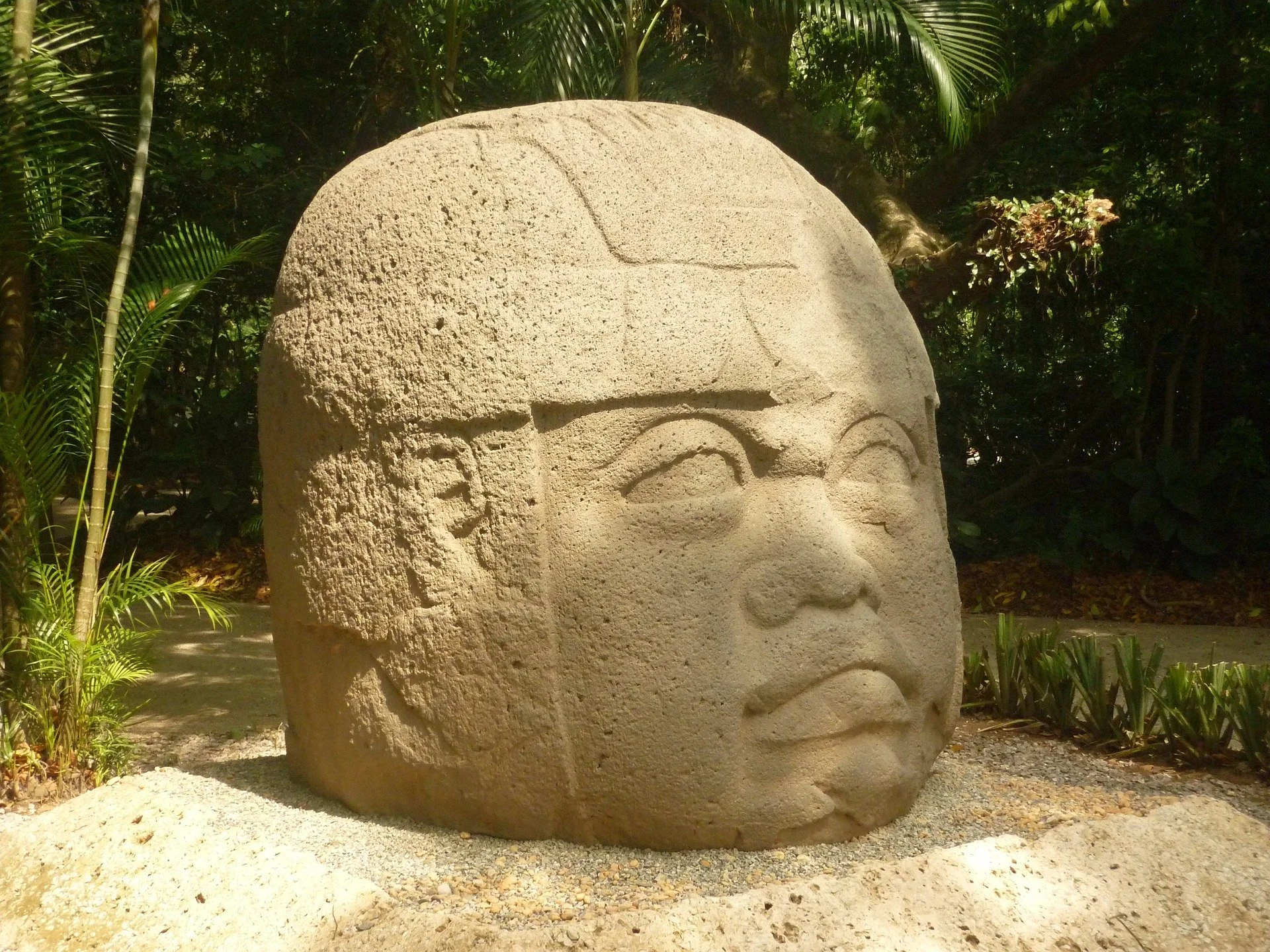
The stone heads are perhaps the most recognizable pieces of Olmec art. Example, example, example.
In addition to the iconic heads, thrones were carved form the same volcanic stone.
The Olmec culture is known for its art in general including intricate works in jade. Example, example, example.
The Olmecs are likely the “mother culture” of many later Meso-American peoples. Here we find the early examples of the ball game, calendar, writing, pyramids, and pantheon that dominate culture here for the next 2000 years.




Science Daily, “Sweet Discovery Pushes Back the Origins of Chocolate”
Iowa State University, “Scientists take major step in understanding domestication of corn”
-
(Edited slightly for clarity)
Charlie: Welcome back to World History 24, where my older sister Ellie teaches me world history in order.
In just 24 hours. My name is Charlie. In our last episode, Ellie took us on a world tour to visit China, the Mediterranean, Kerma, Poverty Point in North America, and the Austronesians in the Pacific. We covered the Late Bronze Age, a time when the Earth was dotted with massive empires and smaller communities with distinct cultures and organizational structures that varied widely from their neighbors. In this episode we'll cover from 1200 to 800 BCE, Ellie takes us back to the corner of Afro Eurasia to witness the dramatic close of the Bronze Age, the rise of a new medal, a new empire, and the origins of a new religion in India.
We'll see a new spiritual movement in Sanskrit and finally in Mesoamerica, our final so-called Cradle. So without further ado, let's call Ellie and continue the magnificent story of human history.
Bronze Age Collapse
Ellie: So episode 4, we're going to cover the time period between 1200 BCE and 800 BCE, and we are going to begin the episode in that world that we spent some time in an episode three. That world that contains the Minoans and the Mycenaeans. It contains Egypt and Nubia.
Charlie: The Bronze Age world?
Ellie: Exactly that Bronze Age world, and we're going to talk about the very late Bronze Age and and what happens.
Charlie: Cool. And when you say world in this context, you just mean like that space.
Ellie: I do mean that space. I do mean that space, but I also mean the way that it's all interconnected and sort of behaves as one unit. So as we talked about remember in episode three, we talked about that shipwreck that had like the the products from all over. You know, it had glass from this place and gold from that place. And you know that interconnectedness is where we're gonna start. Of course, this world is filled with different kingdoms and different city states, and they don't speak the same language and they don't have the same religions and they don't have the same customs. On the other hand, they are so intertwined as to be very dependent on each other.
Charlie: Right. Right. Cool.
Ellie: As we said, there's lots of trade and there's lots of cultural exchange. There's always like the king of this place wants the king of this other place to send their artists to make a sculpture for his palace. Or do you want musicians to come from a different land to play and at your party to show how cool and cosmopolitan you are?
And what's interesting is that over time, Akkadian, which goes all the way back to episode 2, you know, Akkadian is like the language of the north of the northern people of Mesopotamia. Akkadian becomes kind of like the lingua franca of this entire Bronze Age world. So even though it isn't the language that any of them are speaking, really, it's the language that they all use to communicate with each other.
We have all these letters back and forth from people in these different countries, and the leaders all call each other “brother.” The letters are so human to the point where sometimes they're sort of snippy. So there's like, you know, an example of, like a Babylonian king writing to an Egyptian king when he doesn't feel like he got the proper amount of gold. And he's like, “certainly my brother, the king of Egypt didn't check the earlier shipment of gold,” you know, or like this would never have happened, you know, and.
Charlie: Om my gosh. The passive aggression
Ellie: exactly
Charlie: Has started to creep into writing.
Ellie: Yeah, exactly. So we have tablets. You know, this is going back to episode two. We have tablets of King Hammurabi refusing a gift of Minoan shoes. And we have an Egyptian queen who was widowed, and she's probably King Tutankhamun, like King Tut's widow, sending a letter to the Hittite ruler saying, “My husband has died and I have no son. They say about you that you have many sons and you might give me one of your sons to become my husband. I would not wish to take one of my subjects as a husband, I am afraid.”
Charlie: Wow.
Ellie: Yeah. So King Tut's widow, you know, writing to the Hittite rulers. We haven't talked much about the Hittites, but that's another one of these big, you know, civilizations in this world saying send me one of your sons, You know, send me a Prince. And one thing I will say about this exact example is that he does send a son. The son dies along the way. And there's some speculation. That was a trap.
Charlie: Wow
Ellie: He was like, send me your Crown Prince and then we'll murder him, you know, So whatever. Who knows? Long time ago. But anyway, yes, political intrigue, All of that.
Charlie: Cool. Love it.
Ellie: It also makes it interesting because then when there's like a war or an event like that, you know, you can read about it from both sides, which is just interesting, you know, 'cause both sides are literate. So the last thing I want to say about the interconnectedness of the world is tin. So we've talked about, you know, the Bronze Age. The recipe for bronze is copper and tin, Tin is like oil is to the modern world. That metaphor is used over and over again. Everything, everything depends on the flow of tin and the flow of copper as well, but copper is just a little more abundant. Certainly the wealth and the strength and the security of any given empire or any given ruler depends upon their ability to deliver tin.
Charlie: OK. I see what your saying.
Ellie: Because weapons, as well as all manner of other things, are made of bronze.
Charlie: Tools. sure.
Ellie: So if you can't produce bronze for your people, you're toast.
Ellie: OK, so then that's all going along fine all through, you know, our last episode or whatever. And then in this incredibly short window, which can practically be dated between like 1207 and 1177, although, you know, some of the events are are outside of that. But this very, very short window of just a few decades unbelievable disaster just ripples across this entire Late Bronze Age world.
City after city burn, palaces burn. There's all these so much mayhem in that archaeological layer all the way across thousands of miles, you know, bodies that are burnt, people with arrowheads in them. Hetusa, which is the capital of the Hittite empire. The walls and roofs collapse and are burned. You know, we can see that that happened. There's this port city in northern Syria called Ugarit, which is just this incredibly cool city. It's very diverse and interesting. We have tablets in the rubble of it that are in seven different languages, so it was just very cosmopolitan. And also in the destruction of it, we found the oldest written piece of music on the whole earth.
Voiceover Hurrian Hymn
This piece is called Hurrian Hymn Number Six, and as Ellie said, it is the oldest written melody we have ever been able to transcribe into modern music. The cuneiform tablet which we found in the rubble of Ugarit instructs the musician in tuning intervals and movement on a nine string Babylonian liar. Without quick access to a Babylonian liar, I retuned my 12 string guitar following some of the many modern transcriptions.
Ellie: That city was just levelled during this period. And there's this famous heartbreaking letter that we found in the wreckage, which goes, “My father, behold, the enemy ships come here. My cities were burned, and they did evil things in my country. Does not my father know that all my troops and Chariots are in the land of haughty, and all my ships are in the land of Luca? Thus my country is abandoned to itself. May my father know it. The seven ships of the enemy have come and inflicted much damage upon us.”
Charlie: Jeez, So what? Yeah, what is going on? Why is this all happening all at once?
Ellie: Yeah. OK. So we're going to get to that. The last example I want to give of this is Troy. So there is an actual city that we think is probably the city that you know, Troy of the Trojan War that Troy and that's in southern Turkey. And again, like when you read about this in the, in the sort of mythology they talk about how the walls are so big and so immense that you know, Poseidon must have built them or Apollo or whatever. You know, like they're, these are major, major pieces of architecture. And we haven't found evidence of an actual Trojan horse or anything, but there is evidence that at this period it was sacked and burned and there's bodies with arrows in them and burned bodies and whatever. I mean, there clearly was some disaster, whether or not it was exactly the Trojan War as laid out in the Iliad. You know, Egypt survives this, but it's never the same. And it's just, yeah, civilization after civilization.
So again, this only happens in a few decades. So of course, like what happened?
Charlie: Right. What happened?I mean, what the destruction you're describing is taking place over such a massive area in this Bronze Age world. Like, why would it be so ubiquitous?
Ellie: Exactly like that is the question, right? So there's an Egyptian pharaoh, Ramses the Third, who writes about these groups of people attacking Egypt, and he refers to them by all these different names. But scholars now largely refer to them collectively as the “Sea People.” So if you learned about the Bronze Age collapse in high school, you probably learned about the “Sea People.” And in this book that I read called 1177 by Eric Klein, he says that the Sea people are always described like a alien movie where like suddenly out of nowhere a group appears and just city after city gets taken out one after the other.
Charlie: Wow. Yeah. Yeah, Yeah, right.
Ellie: Now, now that's not we don't. We no longer think that. And what we actually think is in some ways much more alarming. And what we think is that just OK. So the world is so connected, as we talked about and a series of things that are sort of unrelated began to go wrong. Climate change, for example, in some parts of this Bronze Age world, the world got a little bit colder. That starts to mess with your crops. There may have been a volcano on this northern island of Hekla, which you know then would mess up your crops.
Charlie: sure
Ellie: Or there's all this evidence of famine may be due to this, climate change, may be due to other things. And there's all these letters back and forth from the king saying, like, my people are starving, like, please send grain. And, you know, there's just a lot of evidence of famine. There is tiny bits of evidence that there might have been some epidemics, like some diseases that swept through, although it's hard because epidemics don't really leave evidence really in the archaeological record very well.
What we now think is that this, that these series of slightly unrelated things began happening and they just dominoed in this way that creates a tidal wave.
So like this group of people in this city, you know, there's climate change and their crops fail and so they get angry and they, like attack their own king, and then that King's trade route gets disrupted. And then this, these groups over here and here suddenly don't have enough money to feed their people. And then this creates a refugee crisis. And then the refugees overwhelm the neighboring kingdoms and then on and on and on. And so now they think what, you know, what we used to think of as these sea people were probably like groups of refugees and then, you know, militaries that had turned on their own government or were escaping their own government. And so they were a bunch of, like, armed soldiers looking for a place to leave or whatever. So some of these places just fall–, you know, just quote unquote, fall to kind of natural circumstances, others do get invaded, endless refugee crisis and just literally, in a few decades, basically every major player in the late Bronze Age is wiped.
Charlie: Dude, that is so crazy. I like–, You're describing some like kind of like a world that's interconnected and strong for its interconnection, and then also is kind of very fragile as well.
Ellie: Absolutely.
Charlie: In the sense that like maybe just a little bit of climate change or or an epidemic or something like that, I mean.
Ellie: I know, I know, it's.
Charlie: It's a little hard to talk about right now, to be honest.
Ellie: No, it really is. It really isn't. Of course, Like, of of course, we now live in a world where, like every event in every country effects everyone else. I mean, there's
Charlie: exactly.
Ellie: yeah, 100%. Wow, crazy.
Assyrian Empire
Charlie: OK, OK, and what now? Where do we go from here?
Ellie: Well, yeah, so. One thing that's probably pretty predictable is that when something like that happens, it creates a power vacuum, and some groups end up thriving in that power vacuum. And so in a minute, we're going to talk about Canaan and we're going to talk about the kingdoms of Israel and Judah. And these are the ancestors of the people who end up writing the Bible. And their kingdoms definitely sort of are allowed to flourish and grow as some of these groups that have been trampling all over this land disappear. But first, we're going to talk about the Assyrian empire, which it becomes a huge empire in this power vacuum.
Ellie: All right. So the Assyrian empire is our first giant Iron Age empire, and it's the blueprint for all empires going forward. So we've left the Bronze Age behind. It's collapsed around us and now we're, you know, we're walking into this thing that historians call the Iron Age.
Voiceover Iron:
Before Ellie gets too deep into the Assyrians, I just wanted to talk for a minute about Iron and the Iron Age. You may remember in episode one when I said that the way we use the word “age” is very context dependent. Copper, stone, bronze, Iron ages usually refer to the period when that material became widespread in the Mediterranean world in China, often somewhat ignoring the rest of the globe's technology. So as we move into the Iron Age, it's important to know that iron had been in use already for centuries in some parts of the world, most notably in Central Africa, where we find evidence of the Bantu people smelting iron in 1800 BCE. That's 600 years before the Iron Age, and if you're curious, we will definitely talk way more about the Bantu in our next episode. The Earth's crust is about 5% to iron, so it's relatively easy to find, but not as easy to use as it melts at 1500°C. That's 400° hotter than copper or bronze, and basically different cultures at different times discovered and mastered different techniques to make their kilns hot enough for the job. As Ellie said, the Assyrians were the first major empire to make widespread use of iron. They certainly weren't the first culture to smelt it, but by protecting their armies with iron helmets or iron shin guards, they gained enormous military advantage over their bronze wielding enemies.
Ellie: So the height of the Neo-Assyrian Empire that that we're going to talk about is from roughly 911 to 610 BCE. And what's true about it is that no state in history had ever been as large and as rich and powerful as it is at its heights. This type of world empire is an entirely new thing on the earth, and it essentially has no competitors.
Charlie: Wow, OK. What do what do people mean when they say, like, the height of a thing?
Ellie: Well, that's a really good point. I mean in some, in a lot of a lot of ways, it just means the time when it's the biggest and the most powerful.
Charlie: Kind of like controlling the most land or?
Ellie Yes, yes.
Charlie: ok ok
Ellie: And in this, in the case of the Assyrians, that's really important. I mean, you'd like to think that means when they were writing their best literature.
Charlie: Yeah, like best to their people or whatever, you know, and a lot of.
Ellie:I mean, sometimes those things coexist. But
Charlie: Yeah, sure, sure.
Ellie: No, that's a really good question. So where are we?
Ellie: We are back in Mesopotamia and the heart of the Assyrian empire is specifically in northern Mesopotamia, so where the modern countries of Turkey and Syria and Iraq meet. And as you know from episode two, people have been there for thousands of years and the Assyrians are very aware of this history. They view themselves as the holders of this ancient and important grand tradition. And so there's all this writing about Gilgamesh and Sargon the Great and all these other sort of leaders that we talked about in episode 2, who at this point are as far away from the Assyrians as Julius Caesar is from us. You know, it's very easy to just be like ancient history. It's all the same but.
Charlie: Right. You kind of accordion all those dates closer together in the past, yeah.
Ellie: It's like very easy to think like, oh, it's all just ancient history or whatever, but in fact, you know, they're they're viewing themselves as the holders of this grand, very long, very ancient tradition.
So there's a few important cities in the Assyrian empire, they make a triangle. So there's Assur and then Nineveh, which has this very important and famous temple to Ishtar in it. And then Arbella and the Centering City, the one that sort of gives it its entire identity, is the city of Assur and the
Charlie: The the city that gives the Assyrians their identity.
Ellie: Exactly, exactly. And it is on the West Bank of the Tigris River. So as you remember the Tigris and Euphrates are the two rivers that run through Mesopotamia. The Tigris is sort of the more like exciting one that is a little bit more volatile and the and the Euphrates is a little more chill. And so it's on the West Bank of the Tigris. And when I say it gives it its identity, this is sort of what I mean. So if you remember, we talked very briefly about the way that the gods and the cities in Mesopotamia relate to each other and each one, each God is associated with one city and it's almost like a patron God, but it's much stronger than that. It's like the identity of the God and the identity of this city are the same. And so if two cities are warring with each other, the two gods are are warring with each other.
Charlie: right.
Ellie: And if a city is doing very well, then that means the God is doing very well. And so as the Assyrian empire takes over, it starts telling all these other places it conquers that their gods are sort of manifestations of Asher.
Charlie: Right.
Ellie: And so it's, you know, one thing that's very true and will come up over and over again is that the dichotomy between monotheism and polytheism is like very Gray, actually. And so this, I wouldn't say that the Assyrian empire is monotheistic, exactly. But they're certainly, like, trending that way and starting to be like all these other gods, feel free to keep, you know, offering sacrifices or whatever. But these are actually just manifestations of the real one
Charlie: Got it.
Ellie: who's just the God with like kind of a capital T, capital G.
So now we're just going to talk really quickly kind of about, like, who are the Assyrians? And I feel like if you learned about them in high school, the thing that you probably learned is that they're really brutal.
That's what they're so famous for, is they're just constantly talking about impaling people and flaying people and burning them alive and violating the purity of the maidens and whatever. I mean, it's just very, that's like their whole thing.
I think that we should take that with a slight grain of salt, although also don't 'cause I think they really were really mean. But that's a tactic. So throughout history we see other people using it, like Genghis Khan or the pirates that are in the Caribbean, you know, a few, 100 years ago, where they do something that is in fact sort of horrible and cruel and then they brag about it as loudly as they can and they're like, go tell everyone that I'm the most scary, vicious, you know, pitiless monster in the world.
Charlie: fearsome
Ellie: Yeah, So then because then when I show up to your city gate, you're like, Oh my gosh, it's that one. And you immediately give them whatever they want. You know, You just surrender.
Charlie: Yeah. Yeah. That makes sense.
Ellie: Yeah. So the Assyrians, I feel like, are very, very remembered for their cruelty, and I don't doubt that they were cruel. And I also just think we should take some of it with a grain of salt.
Ellie:This intense violence and these intimidation tactics and these threats were also directed at their own people and specifically at their women. And this is one very important legacy of the Assyrian empire. It's never like a great time to be a woman in the ancient world. You know, I don't think there's like very many places or times throughout the ancient world that that I would describe as like feminist. But this sort of start something really new where men and women are like entirely different. And so when you, when you read their law codes, it's just every possible like men can ask for a divorce and women can't, or like, you know, quote, if a woman has procured A miscarriage by her own act, when they have prosecuted her and convicted her, they shall impale her on stakes without burying her,
Charlie: holy sh
Ellie you know, so death penalty for an abortion.
Charlie: Right. Oh my god.
Ellie: Women start to not be able to go into the street without their heads covered, and that only applies to kind of married women and upper class women. And then, very specifically, if you're you know so harlots and maidservants who cover themselves shall have their garments seized, they shall be beaten with 50 blows, and she'll have bitumen poured over their heads.
Charlie: Jesus Christ!
Ellie: Right. So it's like, cover your head, unless you're a harlot, in which case if you cover your head, we'll kill you, you know?
Charlie: So early in episode earlier in the podcast or in time, the sort of early Copper Age cultures we talked about as some of them as being like pretty egalitarian or pretty like a good amount of equality between men and women. And then some of the other civilizations that we've talked about certainly have not embodied that. And then this is just like the most extreme.
Ellie: Yeah, this is just on a whole different level. I mean, it's just a whole different level. And then it also starts adding all these things. Like the men are forced to be complicit, like another another law that I want to read. As if a gentleman has seen a harlot covered and has let her go without bringing her to the palace tribunal. They shall flog that gentleman 50 times with staves.They shall pierce his ears, thread them with a cord and tie it at his back. Meaning it's it's like if you realize women are breaking these laws and you don't do anything about it, it's on you.
Charlie: Right. And you'll be punished like you have to.
Ellie: Yeah. And so it just creates this entire, like, it's on all of the men to keep all of the women in check.
And women start to be completely invisible in society, you know, they have to have their heads covered. And then the most powerful and important women, like the wives and concubines of the kings are like completely behind like locked doors. And there's all these rules about, like, the only men that can talk to them are eunuchs, and even they can't without permission, and horrible violence is threatened to them if they stand too close or talk too long. So this is one of the important legacies of the Assyrian empire is just this rigid division. And although we don't actually know how these laws were enforced, to what extent they were enforced, it does seem as though the, you know, they're just violent misogyny running through them, you know, has to be reflective of some type of reality in the society.
Ellie: So, as is true with every 30 seconds of this podcast, there's like entire books written about all these different Assyrian kings and exactly what they did. But the rough story is just that post Bronze Age collapse, they start expanding. There's periods where they don't. Expand as much. And in fact, they even shrink back into a much smaller space. And then and then they go out and expand again. And the result of that is that frequently these kings feel as though they're conquering land that ought already to belong to them because some previous Assyrian king had ruled it.
Charlie: Right.
Ellie: And that is a classic historical move to be like, I'm not conquering, I'm taking something back.
Charlie: Yeah, definitely. Giving Putin vibes.
Ellie: Exactly. Exactly. What their second big legacy is has to do with all this expansion. And that is kind of the blueprint for a way that an empire works. So there's been empires for several episodes now for several thousand years. But largely what that meant was that you would kind of conquer another group of people and then be like, give us a lot of tribute, you know, pay us a lot of taxes and don't rise up. And then as long as you do those things, you can kind of keep your identity and live your life.
Charlie: OK.
Ellie: So their big legacy is to kind of say all these lands that I've conquered are part of us. There's only one people, there's one group and we're all Assyrian.
Charlie: OK, I see.
Ellie: And then they set up these governors, you know, these sort of small kingships in in throughout the Assyrian Empire and those are very related to their military. So military service becomes mandatory and being high up in the military and being a powerful politician are very synonymous.
Charlie: OK.
Ellie: And one of the ways that they force everyone into this kind of Assyrian identity is through this heartbreaking policy called their relocation policy.
What the relocation policy is, is picking up entire groups of people and just moving them to a different part of the Assyrian empire and just plopping them down there.
Charlie: Wow, Right. OK.
Ellie: Yeah, it's really intense. And then they just get a different group of people and put them in the land that you just left empty. And the the, you know, the purpose is to break those ties, to be like you're Assyrian, you're not from this Kingdom or this part of the world or these group of people, You know, you're just Assyrian. And of course it works.
Charlie: Yeah. If you've lost your homeland, your house, your family, ties to a certain place, your Yeah, that makes sense.
Ellie: Exactly. And one of the things that's really intense to read about is the way that the Assyrians actually write about this policy. And they don't write–, There's no acknowledgement of kind of the, like, inherent brutality of uprooting people from their homeland. Instead, they write about it as though they're gardeners that are lovingly transplanting trees to where they ought to be.
Charlie: wow.
Ellie: You know, just I'm just tending to my empire and and putting everyone where they where they should be.
Charlie: Wow, this really seems like a pretty awesome, awesome place to be. Honestly. Really just geat folks.
Ellie: I know, I know, I know. And we'll talk a little bit. We'll talk a little bit about one of the last kings who built this great library and stuff in our next episode, because they also have beautiful art and music and all these other things, you know, But just kind of their legacies are these kind of brutal things.
So in the in the end of the Assyrian empire, which is actually kind of dipping into our timeline for our next episode, but we're going to just say it here, More than 1.5 million people have been deported like this.
Charlie: Whoa. By this deportation policy? Or this Relocation policy?
Ellie: This relocation policy Exactly. So in 150 years more than 1.5 million, yeah.
Charlie: Wow.Jeez.
Ellie: And famously, one of the groups that gets moved like this is the Israelites.
Charlie: OK.
Ellie: And so if you've heard of the 10 lost tribes of Israel, this is them. This is where they're being lost to, into the Assyrian empire.
Voiceover 10 Lost Tribes of Israel:
In case you don't know the 10 Lost Tribes of Israel, it's a story from the Bible that begins with a wrestling match between God and a man named Jacob. You'd think it'd be a sure win for God, but Jacob holds his own for a whole night. Eventually God calls it a draw and says your name will no longer be Jacob but Israel because you've struggled with God and with humans and have overcome. In Hebrew, Israel means “he who wrestles with God.” Jacob, now named Israel, has twelve sons and grandsons that each give rise to a tribe. These are the 12 tribes of Israel. Later in the Bible, when the Assyrians conquer the Kingdom of Israel, they deport 10 of the 12 tribes. These are the “10 Lost tribes of Israel.” This biblical retelling of the Assyrian deportation event has been used in biblical religious conspiracies to explain various mysteries throughout history in an ongoing pattern of anti-Semitism. People the world over have been accused of being or conspiring with one of these lost tribes and causing everything from the Bubonic plague to the Mongol invasion. The Lost Tribe myth has also been used by surprisingly reputable archaeologists to connect dots in humanity's shared mythology, like why are there flood stories in East Asia, Central America, or Polynesia? Perhaps one of the 10 lost tribes of Israel settled in those lands and told them about Noah. The search for these lost peoples may seem like a simple religious or mythological story, but innumerable people have been killed because of their presumed connection to these groups. And of course, as we just learned, the lost tribes are not lost. They were simply assimilated into the Assyrian Empire.
Israelites
Charlie: So, wrapping up the Assyrian Empire, what else is happening in the world at this point?
Ellie: So we're going to stay in this rough geographical region in the Fertile Crescent, and we're going to talk about the origins of the Israelites. Our very first written mention is in 1207 BCE, and that is this Egyptian pharaoh who's bragging about his military conquests and just how he's taken over the entire world. And he lists off this whole long list of all the people that he's conquered. And at the very end, he says “Israel is laid waste. His seed is no longer.”
Charlie: You said 1207 like the beginning of the Bronze Age collapse? Basically
Ellie: exactly right. Right then yeah. So we are gonna talk about the origin of this this group, the Israelites in in the hills of Canaan.
Charlie: I definitely know the name Canaan, but I don't actually think I know where that is.
Ellie: OK. So Canaan is the western part of the Fertile Crescent. So it's like in the southern Levant in the in the current countries that occupy that land are Syria and the occupied Palestinian territories and Israel and Jordan. And so of course, people have lived there for thousands of years because we've been talking about, you know, this, this, this geographical location for a long time. But to the to the outside world, they might be collectively referred to as the Canaanites, but to themselves they're very like different groups of people with different ways of living.
Charlie: I see, not one unified civilization or anything.
Ellie: Yeah, exactly, exactly. And so this land has the Mediterranean Sea on one side and then pretty severe desert on the other. And so it kind of creates this corridor that is a very important connection for Egypt to all of the kind of northern kingdoms and empires that Egypt is trying to get to and trade with. So Canaan has sometimes been referred to as “the land between.”
It has very wet summers and it has very dry winters. And that allows, allows the various groups in in Canaan to grow like a very standard agricultural package to this whole geographical region, which is like barley and wheat and flax and figs and dates and almonds and then grapes and olives, which are both important because olives mean olive oil and grapes mean wine. And then those two things are very good commercial products when you're trading. And so as Egypt and all the various kingdoms of Mesopotamia are kind of trampling back and forth over Canaan in order to get to each other, There's also plenty of robust trade with the Canaanites at some some points in history.
Some groups in Canaan are kind of powerful and have slightly bigger kingdoms and whatnot, and at other times they're very much being subjugated by either Egypt or a Mesopotamian Kingdom.
Charlie: Is at some points in history up to this point.
Ellie: Yeah, up until this point, yes, Sorry. Yeah, up until this point.
Charlie: OK.
Ellie: And we are now going to zero-in on one specific group of the Canaanites. As I said, there are groups in Canaan that have kind of bigger kingdoms and like bigger city states. The group that we're zeroing in on is not, is not one of those. It's not some giant urbanized group. Instead, it's just a group of people that live in the hills north of Jerusalem and southwest of the Sea of Galilee.
Charlie: ok.
Ellie: And they are herders and they're subsistence farmers. And we've found, you know, maybe 250 of these very small communities, like maybe 100 people live in each one. And there they are, just kind of living somewhat ignoring the mayhem of these big empires that are subjugating other parts of canaan
Charlie: Ignoring meaning like they're not being subjugated or or. Well, meaning that they're not powerful enough that they're like important to be beating down all the time, really.
Charlie: ok.
Ellie: Like they're not being warred with for example. And so what that really means, importantly means is that they are pretty immune from the Bronze Age collapse, 'cause as we talked about with the Bronze Age collapse, all the different kingdoms and empires are connected to each other and they domino because of that connection. And so if you're a group that's pretty self-sufficient, you kind of are immune to it.
Charlie: of course. Interesting, right.
Ellie: It's really interesting. So our group that's in the in, in these hills north of Jerusalem are refer to themselves as the Israelites and they over time have kind of divided themselves slightly into two separate geographical regions. And so in the north, that is called Israel, and in the South that's called Judah. And so it's a situation where all the people who share this whole cultural practice are the Israelites. But then there's also the people from the actual Kingdom of Israel, and then the people from the actual Kingdom of Judah. So if you say a Judean, A Judean is also an Israelite, if that makes sense. But an Israelite is not necessarily a Judean.
Charlie: OK, yeah. And this group of people has been calling themselves the Israelites since it's kind of before the Bronze Age collapse and before this bifurcation into the two geographical regions. Is that right?
Ellie: Yeah. Well, yeah. Presumably because this Egyptian pharaoh calls them that in 1207.
Charlie: Oh yeah right.
Ellie: I mean, we don't like that's our first written record, so we don't really know. But I assume he didn't just make that up.
Charlie: Right.
Ellie: And so again like in this, in this kind of power vacuum, these communities begin to kind of specialize and that allows for more robust trade between these little communities and they just kind of start to grow and they are worshipping the standard Canaanite deities. So among those is the is the God ‘El.’ So if you can like hear Hebrew words like reverberating in your brain, you can like hear that word like ‘Bethel’ which means House of God or ‘Elohim’ or ‘Israel’ which is he was struggled with God.
Charlie: So El is just one of one of the many gods that they worship.
Ellie: Yeah, Yes, exactly. Exactly.
Charlie: OK, interesting. OK.
Ellie: At. At this point, yeah.
Charlie: OK, got it.
Ellie: Yeah. And and so the northern section of Israel is a little bit greener and more fertile. And so it develops a little bit earlier. And in kind of the eight hundreds BCE we start to see like bigger administrative buildings and palaces and fortifications and kind of all the, you know, the signs of a sort of thriving urban.
Charlie: City situation.
Ellie: Exactly, exactly. And until eventually we get the Omri dynasty, and that is like the big huge dynasty of this northern Kingdom of Israel. And it's named after, as is very normal, named after the first, like this kind of founding king. And so he's this Israeli general who becomes the king named Omri, and he and his son just really build and expand this huge northern empire of Israel. And they center the whole thing around this capital city of Samaria, which is not to be confused with Summer, which is SU, This is SA
Charlie: Right.
Ellie: And they fight the Assyrians, you know, who we know are pretty formidable, you know, foe at this point. The Assyrian empire as as you know, we know, 'cause we were just learning about them are are a little bit unstoppable. So you know, the the small Kingdom of Israel is not really a match for them. And so in some ways, the history of the next like 100 years is kind of the encroachment of the Assyrians on Israel. And then again, dipping a little bit into our next episode's timeline, as we said, in about 720 BCE, there's this Last King of Israel, Hosea, and he becomes the king by having his predecessor assassinated. So I don't, I don't know what to say about that. But he does and and he fights them off. And at this point, the entire Kingdom of Israel is basically like an island around this capital city of Samaria. Like it's been pretty, you know, it's very much shrunk and Samaria is besieged for three years. Like this King Hosea fights them off. But eventually, you know, there's no fighting the Assyrians, and so eventually it falls. And this is the point where the Assyrian empire just deports like massive amounts of people into itself, like into other parts of Assyria.
Charlie: It deports the Israelites into Assyria.
Ellie: Exactly, exactly, yeah.
Charlie: right.
Ellie: And So what that means is that people take refuge by going South into the Kingdom of Judah.
Charlie: You're saying some people are being deported into the Assyrian empire. The people who aren't are are kind of fleeing from that.
Ellie: Exactly, exactly. So many, many people flee S into Judah, and it's at this point that the Kingdom of Judah kind of rises up. And so as we said when we were talking about Assyria, this group of people that ends up being deported out of the Kingdom of Israel is what's known as the 10 lost tribes of Israel. And that's where. Sort of that whole story and sense of loss. Comes from.
Charlie: Gotcha. OK. Is that a wrap on the Israel section for now?
Ellie Yes, that is a wrap. We'll be we'll be back in our next episode.
Vedic India
Charlie:Cool.So where do we go now?
Ellie: So now we're going to go over to India and we're going to talk about the Vedic period.
Charlie: Nice. We haven't been to India since the Indus and episode two, I've been wondering what's going on.
Ellie: Yes, that's very true. That's very true. The the Vedic period is a really important time in Indian history. It has a huge influence over Indian culture from now on. This is the time when the Vedas were written, which, you know, the the Vedas are the foundational texts of Hinduism, which is the world's oldest act of religion. More than a billion people practice it currently. And so we're going to talk about that, that the time period in which they were written. And so as you just said, we talked about the Harappan civilization or the Indus Valley civilization back in episode 2. And so that was that group in northern India on the border of Pakistan, which has this complex urban culture, large cities like Harappa and Mohenjo Daro, and it has writing and it has underground plumbing and it just has this whole kind of incredible culture that doesn't seem to have rigid power structures and whatnot. And so that's where we left India.
Charlie: Right. If anyone's listening that hasn't listened to that episode about the Indus, you got to go back and listen to it because it's really cool. Yeah, it's my favorite place we've talked about it's.
Ellie: Pretty, Pretty cool. And so when we finished talking about them, we sort of briefly mentioned that there was an influx of these nomadic people as the Indus Valley was as the Indus Valley civilization was kind of vanishing. And so that group of people is the Indo Aryans and they came from the Steppe of Asia. And just to slight side note: the word Aryan, which in our modern years is like a very like racial term, doesn't have anything to do with race at this time. It's just referring to this group of people.
Our best guess is that this is just kind of a gradual migration of people coming from the Steppe of Western Asia, probably through Iran and then gradually kind of coming into India and like probably interacting with the Indus Valley civilization. You know, like it's it's like very unclear like how much cross cultural exchange there were versus like if it was kind of unrelated that they showed up in the Indus Valley, disappeared, you know, But anyway, roughly at this time this, you know, more and more migrants are coming from the north.
This group brought with them horses and Chariots and Sanskrit. I mean that's you know, a big thing that was the language that they brought with them and then the belief system and all the cultural practices that go along with Vedic culture. So they brought Vedic culture with them and the Vedas.
So for whatever variety of reasons, the kind of culture in India which had been these large urban centers kind of disappears at this time and becomes much more nomadic.
Charlie: hmm. Ok
Ellie: And as you just said, of course the people in the Indus Valley were writing the the group of people who come from the north aren't. And so they bring the Vedas, but they bring them as an oral tradition.
Charlie: Sanskrit at this point is just an oral language.
Ellie: It's a spoken language. Exactly, exactly, rather than a written one.
So there's four Vedas, and they are considered the oldest Hindu texts, and they're filled with hymns and wisdom and instructions about how to live your life and how to practice various rituals, including the sacrificing of animals. There's histories and math and astronomy and philosophy and everything that you would expect in a, you know, religious cultural piece of writing. The word Vedas means that which was known or knowledge. And so the idea is that they're uncreated truth. The Vedas are uncreated truth. They're just truth that exists in the world. And there were these ancient sages called Rishi that could hear this uncreated truth and this knowledge. And so they spoke it so that other humans who weren't sages could hear it.
Charlie: Ok.
Ellie: And so the job of each generation is to pass down the this recitation exactly.
Charlie: Right.
Ellie: And so each generation teaches the next generation how to recite with complete precision. And so the the students of of the Vedas can literally recite it forwards and backwards. It's like exactly, exactly the tones the word pronunciation etcetera is the same. And so although it they didn't get written down into written Sanskrit for several 100 years, you know, at least theoretically they've been passed exactly and that's still happening today. You know, these are the these are still being chanted at weddings and funerals like today.
Charlie: Wow, that's so cool.
Ellie: Yeah, it's really, really cool. They're the longest continually used sacred texts.
Charlie: OK, let me try to see if I understand this all exactly. So the Indo Aryans come to India through Iran. They're speaking Sanskrit, and they come with this tradition, this Vedic tradition somewhat established already and they continue on with it sort of teaching. And as an oral tradition, they're they're passing on this, this, that which is known. They're passing on a cultural, spiritual, religious practice. And then eventually, some hundreds of years later, that oral tradition gets written down in Sanskrit.
Ellie: Yep.
Charlie: And that's that's the Vedas that we still have the four Vedas.
Ellie: Yeah, that's exactly right. And so the earliest hymns in the Rigveda, which is the earliest Veda, are we think we're we're composed or or heard and began to be recited around 1500 BCE. And in the Rigveda, which is this oldest one, is this idea that there's a primary person which has different types of people representing the different parts of its body. So it calls the priests and teachers are its mouth and the warriors and the rulers are its arms, and the merchants and traders are its legs, and the workers and peasants are its feet. And this is the earliest recorded writing that we have about the varnas, or, you know, the what we call the caste system eventually.
Charlie: ok
Ellie: And in this early writing, it's very unclear. You know the word Varna is is translated to mean something much more like class than caste. And the the difference being like you know, people can be a warrior, people can be a laborer and they can just happen to be that. And in a caste system it means that you're born into that. So your, you know your birth and your inheritance is this role. And so that is certainly what it eventually becomes. Yeah. But it but whether or not that's what the Rigveda meant is like very you know, it's a very unclear that it meant you're born into it.
Charlie: And you're dwelling on it because there's Indian historians that are are tracing the lineage of the caste system to potentially to the Rigveda.
Ellie: Yeah. Well, I mean, it's sort of like everywhere in all cultures across the world, whenever there's like injustices happening and everyone's trying to use every historical writing and every philosophical writing to justify or fight against it, you know, And this is just like one of those examples where if you're trying to hold the caste system up, you can be like, look, the Rigveda says, you know, and if you're and if you're not trying to do that, you can be like, no, it doesn't, you know, and and so, I mean, it just feels like a very familiar argument basically anywhere in the world. Yeah.
Charlie: Yeah, yeah, absolutely. Yeah right. And sorry, one more question, just clarifying, 'cause I think I know like somewhat about the caste system, but you and and you said it just basically the caste system didn't allow for like any class or social mobility at all. Essentially, like you were born into a thing and it was very rigid. You stayed there and there was a specific hierarchy of of society that was maintained from the time of your birth until you died and you couldn't really avoid it.
Ellie: Yeah, absolutely. And of course, at different points, I mean, this goes on for a couple thousand years in Indian history. And so at different points it looks very different. And in different places it looks very different.
Charlie: Ok.
Ellie: But more or less, yeah.
Charlie: Yeah, OK.
Ellie: And so the last thing I want to do, which is a little bit ridiculous to even try, is just to really quickly summarize Hinduism, which you know, we'll do with all the world's major religions like as they come up. And of course, it's ridiculous to summarize a a religion in like 2 minutes. And please go read 10 books and I'll you know, recommend them on the website.
Charlie: I think I need to write like a little like, you know, talk show Jingle for this moment like “Ellie summarizes world religion!”
Hinduism Summary
Ellie: OK, so in Hinduism there is one universal God or soul which is known as the Brahmin. And that is what everything is and what everything is made of. The metaphor you see over and over again is the ocean. And so drops come out of it and sort of give an illusion of separateness. But ultimately it's all one thing.
At the center of each person is a piece of that universal God, and that is known as your atman. And also inside a person is there jivatman which is loosely translated as a soul, and that is in a cycle of death and rebirth. And what you want as a human is to achieve Moksha, which is liberation from this cycle of death and rebirth. And that happens by realizing your oneness with the Brahmin.
Charlie: OK. Just like as soon as you realize you're, you're freed of it kind of.
Yeah, yeah. And so that that ends your suffering, like that enlightenment, that realization like ends your suffering and, you know, gives you eternity basically because you become part of this eternal God.
There are 4 main paths, or yogas, to achieve this unity or this liberation and some may speak more readily to you than others. And they're the paths of knowledge, of love, of duty, or of meditation, like achieving it by looking inside your own mind. And of course, these words don't translate exactly.
In Hinduism there's the concept of Karma. So the Hindu universe is perfectly moral. Everyone gets exactly what they deserve. So your thoughts and your actions and your past life affect this life and your thoughts and actions in this life are will affect your next one.
And so you can live a good life by adhering to your Dharma. And so your Dharma, again, hard to translate, but it's kind of like the idea of your duty or your role or your ethics. It's like your job in this world. So the Dharma of a lion is to chase a gazelle. The Dharma of a person depends on your age and your station in life and your gender. And so an elderly priest has a different Dharma than a young laborer, for example.
And so when the earth's Dharma is out of balance, an avatar, which is the material incarnation of a deity, comes and helps restore the balance. So avatar means descent in Sanskrit. And so it's, you know, a deity descends to the earth.
And so that brings us to the Hindu pantheon. And so Hinduism has hundreds of gods, but it might be that for many people they're understood as more like manifestations of one God in in the Vedas and in the Bhagavad Gita, the language is very much like the one God, you know, it's very singular and that the different gods are manifestations of that God. So having said that, at the center is essentially a Trinity, which is Brahma the creator and Vishnu the preserver and Shiva the destroyer. Depending on exactly what type of Hinduism you practice and where you live geographically and when you live in time, different gods and different religious texts might be more held up, be more sacred.
Charlie: You said “the Bhagavad Gita.” What is that?
That is another very, very important Hindu text. It's written a little bit later, which is why we didn't talk about it right now. But it's, you know, it's incredibly foundational, very important, very sacred.
Charlie: Interesting. OK. That's the that's the the lightning summary of Hinduism there, yeah.
Ellie: Yeah. And again, please, please go read more. Use that as the as the smallest jumping off place.
Charlie: Right. And I imagine we will be talking quite a bit more about it, considering it's like a massive world religion today.
Ellie: 100%, yeah. We're going to be back in India in the episode after the next because that's when the Buddha is born. And so, yeah, Hinduism will keep coming up for sure.
Olmecs
Charlie: OK, I've been so excited to talk about this because this, the timeline for this episode covers the timeline of the 6th cradle of civilization that you foreshadowed long ago, right?
Ellie: Yes, yes, exactly. We're going to talk about our 6th cradle of civilization, and it is all the way on the other side of the world again. And it's in Mesoamerica. And Mesoamerica is the modern day countries of southern Mexico, Guatemala, Belize, Honduras, El Salvador, Costa Rica, Nicaragua, that whole stretch. And in that space a massive civilization grows centering in northeastern Mexico, so right near the Gulf Coast. And they are known to us as the Olmecs.
What's particularly interesting about this group of people is that we don't actually really even know if they would have thought of themselves as a group of people. We are looking back without the ability to read their writing, which we'll talk about in a minute and without much cultural context at an archaeological package that looks similar over a big space. You know, we're like, we see this type of art here and we see it, that same type of art over there. Therefore they're the same. And that may have been true, or it may not have been true. So we talk about the Olmecs. What we actually don't know is if everyone were referring to as the Olmecs, even spoke the same language, or would have thought of themselves as the same as each other.
Charlie: OK, and clearly not as distinct as like had the same ruler. We don't know that.
Ellie: We really don't. However, one thing that's very interesting about the Olmecs is that there's three major, major sites, you know, like big cities, big, you know, urban centers and they kind of exist in succession and they don't really have any other peers at the time. So San Lorenzo is the first one. And So what I'm saying is that when at the height of that urban center, there weren't a bunch of other urban centers right around like in Mesopotamia for example, where, you know, Ur was there, but also Uruk was there.
Charlie: Right. So San you're saying San Lorenzo was one isolated city more or less without a whole bunch of cities being right nearby?
Ellie: Yeah, exactly. And So what that that maybe maybe leads us to think is the idea that that is the center of this culture and that the people around may pay tribute to them. But that's kind of its capital. So maybe that's the way it is. And this is all one group of people that thinks of itself as a group, but we don't actually know that.
So the height of this city, San Lorenzo, is between 1200 and 900 BCE, so it fits right neatly into the timeline of this episode. And it's on a plateau near a river. This whole land is a is a land of shifting rivers and creeks and Oxbow lakes. It's very, very wet and it's very hot. It's described as ‘the land that tastes of water,’ which I think is the most poetic thing I've ever heard.
Charlie: yeah thats cool.
Ellie: But it does make archaeology very difficult unfortunately, because that's not a land that that preserves things as well as you know, some other ones.
Charlie: Right.
Ellie: So San Lorenzo is built on a plateau that's artificial down 7 meters. So it's on the banks of this river, but then it's been built up 7 entire meters.
Charlie: What the heck?
Ellie: I know the the again the volume.
Charlie: What is it just people doing this dude
Ellie: I know.
Charlie: What is with this?
Ellie: Well, I mean, I'm assuming it's about flooding,
Charlie: yes.
Ellie: But it's just the the. Work. I mean, just the labor is unimaginable,
Charlie: I'm just like low key, put it somewhere else, you know?
Ellie: Well, I may be good defense anyway, I don't know. And it's huge. So it's 700 hectares of space,
Charlie: ok.
Ellie: so Uruk and Mesopotamia is about half of that. Harappa in the Indus is 150. So San Lorenzo is very big.
Charlie: Jesus, OK.
Ellie: So this platform which again was moved by baskets just like in Poverty Point is somewhere between 500,000 and 200,000 cubic meters of dirt. So just you know, it's just unimaginable. So on this platform are homes and residences of elite people. Also on that platform are temples and other types of administrative buildings, including one particularly impressive residence which is called the Red Palace.
And there's all kinds of things like obsidian and jade and serpentine, you know, which comes all the way from like Guatemala or Oaxaca or you know, from far away. So there's lots of exchange of goods with people that are very far away. Again, we're not sure exactly what the political relationship is, but clearly there's robust exchange of goods happening.
Charlie: Cool. So we've got, we've got serious social hierarchy, hierarchy, we've got trade and currency.
Ellie: Yeah, exactly.
Charlie: It's a proper city.
Ellie: And again, because this is, you know, Mesoamerica, their diet is like, on point. So they have domesticated gourds, fruit trees, squash, beans, avocados, chocolate, chilies, fish, and then corn. You know, which, again, I know I'm like, just.
Charlie: Dude, solid.
Voiceover Corn:
We have to talk about corn. It's domestication is one of the craziest agricultural feats ever. The closest wild relative to maize or corn is a group of wild grasses called teosintes. Most of the time when we see a domesticated grain, the relationship to its wild ancestors is pretty obvious. If you look up a picture of wild Emer, for example, it looks pretty much like the wheat that it eventually became. Teosintes’ relationship to corn, on the other hand, is not obvious at all. Teosinte looks different. It's short, it is barely edible, with dubious nutritional value, it's difficult to harvest, and it has less than 20 kernels. In other words, none of the traits that make a modern year of corn valuable could be seen by looking at the ancestor, and these traits are genetic. Each one requires precise selection to modify from generation to generation. Some are controlled by over 10 distinct genes, making the selection of desirable traits unimaginably slow and complicated, if you remember your single-gene Punnett-squares from middle school. And it may go without saying, but the ancient people who did all this selective breeding did not have a modern era of corn to work towards. It's pretty easy to see how so many cultures and peoples put corn into an almost divine category. Somehow these incredible plant breeders turned a shrimpy little grass into a golden ear of corn. We don't completely understand how they did it, but we do have a vague timeline. Maize began to be domesticated in around 7000 BCE in southern Mexico by 4800 BCE we see forest clearance for maize cultivation in the Tabasco region of Mexico. By the year 0, maize was a crucial part of almost every diet on two entire continents, and in 2022, the world grew 1.15 trillion kg of maize.
Ellie: So the Olmecs are very famous for their incredible art and their statuary, and people who know a lot about art, which isn't really me, talk about its naturalism. Later on, in a lot of Mesoamerican cultures, the art is very stylized, and here it's not as much like that.
Charlie: ok.
Ellie: So their most famous art is of course their iconic stone heads, which are these massive, massive heads of their rulers. And every source I looked at gave a different range for their exact size. But they're like between 1 and 3 meters tall, and they weigh thousands of kilograms. Like they're just huge.
Charlie: right.
Ellie: And but then the really, really crazy thing is that the the stone, the volcanic stone that they're made from is sourced in the Tushla Mountains, which are 60 to 120 kilometers away.
Charlie: What the… this is some this is some Egyptian pyramid nonsense.
Ellie: I Know, I know. Because there aren't draft animals in Mesoamerica, which makes it even more wild than the Egyptian pyramids.
Charlie: oh my gosh
Ellie: No draft animals. And these things weigh thousands of kilograms. So they somehow got these rocks that weigh thousands of kilograms, 100 kilometers. And people sort of say casually in books like, well, they transferred them on rafts, on rivers. I'm like, well, that doesn't really clarify to me how they did that. Like specifically.
Charlie: Hell no. How did they move them one inch? I don't care about how they moved them once they're on a raft.
Ellie: Yeah, no, it's it's really, really. I mean, yeah, I mean, as we've said so many times, just the feats of like engineering and artistry. Yeah, well, they're just mind boggling.
Each one of the heads has a very specific headdress on it, and in later Mesoamerican cultures people had identifiers on their headdresses. So one of the things about the Olmecs in general is that you see all these precursors to things that become very common and many, many later Mesoamerican cultures and groups. And that is clearly in their art and their head were, you know, their headdresses, like we were just saying. It's also true about the religion, their sports, their writing. So there's like a kind of famous game that you might be able to picture where people play with like a rubber ball in an arena, and that is like, you know, a big game in many Mesoamerican cultures that starts here
Charlie: ok.
Ellie: The earliest version of the Mesoamerican calendar starts with the Olmecs.
Charlie: OK.
Ellie: And the pantheon of the Mesoamerican Gods is also clearly has its origins here. So there's lots of wear Jaguar, babies like a werewolf, like a wear Jaguar. There's a lot of like mixing, like animal, like gods, animals and people. There's the maze God is everywhere, which is again a God that is very important in later cultures. And there are lots of imagery of twins, which is important throughout future Mesoamerican religions and creation stories.
The Olmecs are big adopters and big spreaders of written language. We're actually not totally sure if they invented it or if they borrowed it from somebody else, but certainly they spread it widely and they used it widely. Interestingly, we have some tablets and some artifacts that look like writing from as early as 1000 BCE, but the language or the markings on those tablets don't seem to be related to the language that we know that the olmecs actually wrote a little bit later, which, yeah, very interesting.
Ellie: So I I don't know what the story is. You know what? You know when the shift happened. Or maybe the first thing isn't writing. We're not sure.
Charlie: Yeah yeah cool.
Ellie: Yeah, yeah, really, really interesting. And then again the calendar and so this the the Mesoamerican calendar is this incredibly important thing, you know that a lot of people associate with the Mayans. And the earliest date that we have on it is actually 36 BCE. It's actually December 8th, which is my birthday 36 BCE. So that's not, you know that's that's many episodes away from where we are now, which is only an 800 BCE, but it's this group, it's the olmecs who eventually develop that calendar.
So San Lorenzo goes along, It's kind of the, the center of this culture as far as we can tell until about 900 BCE. It sort of fades in this, in this other city seems to replace it in a slightly different group and becomes the major central site, and that is La Venta and that's there from 900 to about 400 BCE.
Charlie: ok
Ellie: And and there we get pyramids,
Charlie: Right;
Ellie: which look very much like the ones that appear in later Mesoamerican societies. And then that one wanes and 400 BCE and yet a third site appears and that's in the mountains.
And that one is called Tres Sapatos. And you know, we'll circle back to them and in several episodes and talk about the Mayan calendar. And that is kind of the end of our world tour between 1200 BCE and 800 BCE. And we have all of our cradles of civilization on the. Table.
Charlie: We've completed them. Nice.
Ellie: Yes, we're cradled up.
And with that, we come to the end of our 4th call, covering the years from 1200 to 800 BCE in which we witnessed the Bronze Age collapse, the rise of giant iron empires, the origins of the Israelite, Vedic and Mesoamerican cultures. In our next episode, we will cover the years 800 to 575 BCE. We will visit the Bantu people on their expansion across southern and central Africa. We'll see the fall of the Assyrian Empire and the rise of a new empire which takes the Israelites captive. We will see the origins of the alphabet and finally spend time with the 10,000 year old Jomon culture in Japan.
Bye Ellie!
Bye Charlie!
World History 24 is written and researched by Ellie Koczela. I do the production and music. Our logo and design work is done by Alyssa Alarcon Santo. For links to any sources mentioned in the episode, as well as lots of fascinating extra material, including a video of me recording The Hurrian Hymn number six, visit worldhistory24.com. You can also find information there about how to support this podcast. That's worldhistory24.com. My name is Charlie Koczela and on behalf of myself and my sister, thank you for listening and we will see you next hour.

-
Episodes
- Jan 24, 2023 Hour 1 | 3,300,000 - 4000 BCE
- Jan 23, 2023 Hour 2 | 4000 - 1700 BCE
- Jan 22, 2023 Hour 3 | 1700 - 1200 BCE
- Jan 21, 2023 Hour 4 | 1200 - 800 BCE
- Jan 20, 2023 Hour 5 | 800 - 575 BCE
- Jan 19, 2023 Hour 6 | 575 - 480 BCE
- Jan 18, 2023 Hour 7 | 480 - 300 BCE
- Jan 17, 2023 Hour 8 | 300 - 100 BCE
- Jan 16, 2023 Hour 9 | 100 BCE - 100 CE