Hour 5 | 800 - 575 BCE
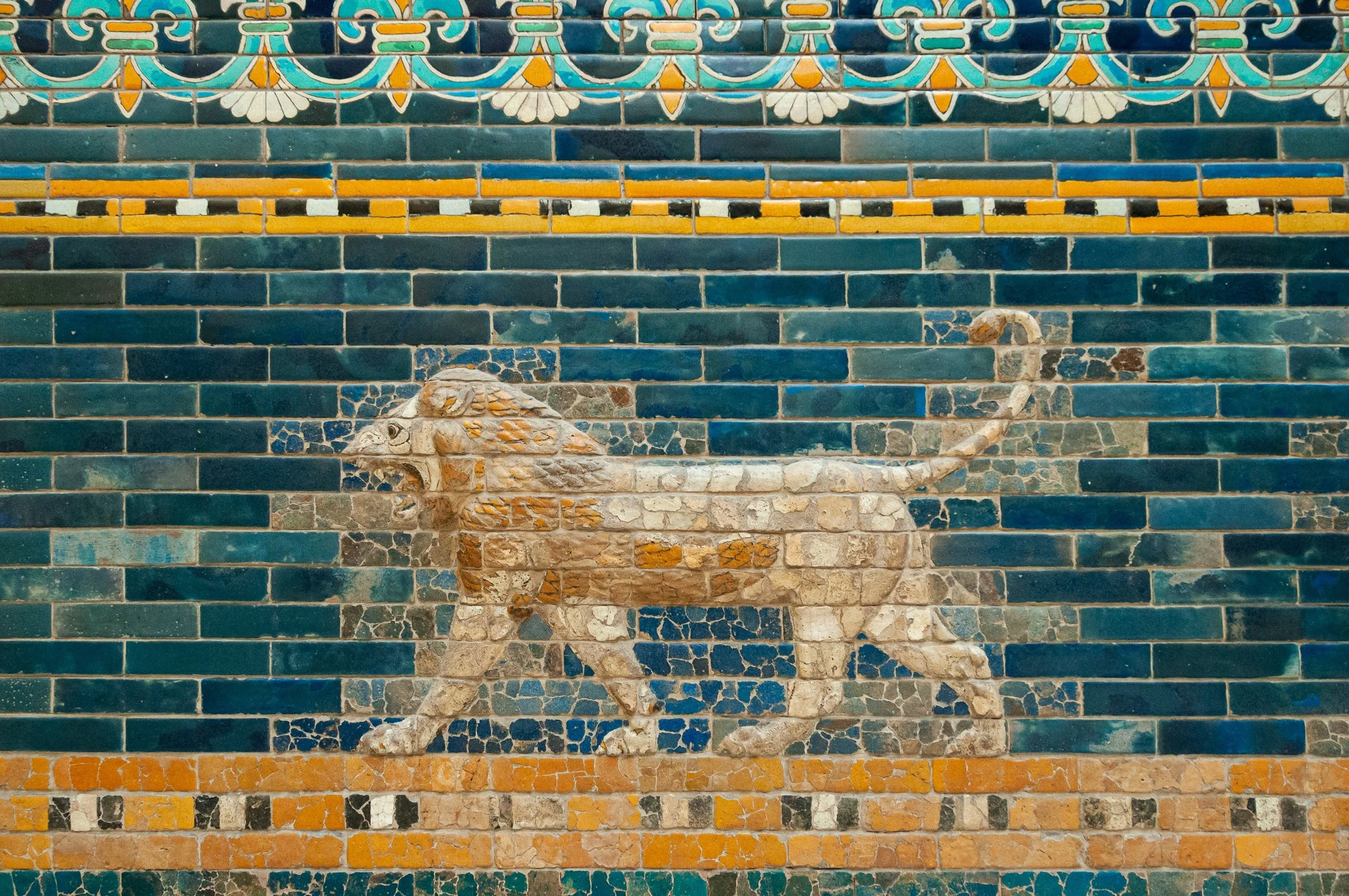
Bantu Expansion · Iron Working in Central and Southern Africa · Fall of Assyria · Ashurbanipal’s Library · Babylon · Siege of Jerusalem · Babylonian Captivity · Phoenicians · Carthage Founded · Invention of the Alphabet · Kingdom of Kush · 25th Dynasty of Egypt · Jomon Culture
Browse the main books, articles, lectures, and interviews we relied on to make this episode.
Note: We’ve added links throughout the SYNOPSIS which are not our official sources. We’ve linked pictures, maps, encyclopedia entries, etc for you to enjoy if you want to see the things we are discussing, or get a quick reminder of people, time periods, concepts etc (what is an australopithecine again??). For our official sources check out the BOOKS, ARTICLES, INTERVIEWS, and LECTURE tabs.
In this episode we cover the years from 800 to 575 BCE. This episode will also follow the expansion of the Bantu people throughout central and southern Africa. In the intersection of EurAsia, the Neo-Assyrian Empire will fall and the Babylonians take their place, conquering many peoples and famously taking the Israelites captive. We will discuss the invention and proliferation of the idea of an alphabet. We will see the rise of the kingdom of Kush and finally look at the 10 thousand year old Joman culture in Japan.
Bantu Expansion
In this podcast interview Luke Pepera laments the lack of written Bantu records.
The Bantu language family.
We too often think of people’s movements as simple as lines on a map. example, example, example.
Iron working and agriculture spread across Africa with the Bantu people, eventually reaching as far as South Africa.
Fall of Assyria
Ashurbanipal in the garden note the head of the conquered King Teumman of Elam hanging from the tree.
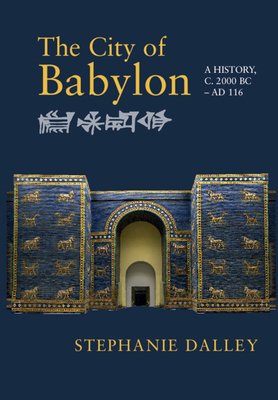
Very cool book by Assyriologist, Stephanie Dalley, explaining the confusion between Babylon as an actual physical place, and Babylon as an idea. Especially when misinterpreted by the Greeks and Romans. Because of this confusion, it’s possible that the “Hanging Gardens of Babylon” are actually in Nineveh, the capitol of the Assyrian Empire.
Babylon
Babylon allies with the Medes to defeat Assyria.
The massive walls of Babylon were considered one of the seven wonders of the world by some ancient writers.
Tower of Babel - endlessly imagined by artists: example, example, example, example.
The story of the Babylonian Captivity is still extremely important to peoples around the world. Symbolizing the violence of being help captive away from your home. The story, and specifically the psalm which recounts it, has been made into songs many times including this classic.
Phoenicians
Tyrian Purple dye made the Phoenicians rich.
Here, Mouhamad Ghassen Nouira, a Tunisian historian, revives the ancient craft.
As the Phoenicians explored the mediterranean they began building more and more settlements along the coasts. Including, most famously, the settlement that grew into the city of Carthage in northern Tunisia.
Shell middens are found across the world: South Africa, Japan, Maine, Australia, Saudi Arabia, India.
History of the alphabet.
Jomon culture in Japan
Jomon pottery is possibly the oldest pottery in the world. Example, example, example, example.
Food storage pits.
Aside from its beauty, the jade art is evidence exchange of goods over long distances. Example, example.
Jomon art includes many figurines which are referred to as symbols of fertility. This does not strike me as a pregnant woman, but see what you think.
Small clusters of stone that seem to be sundials are also common across Jomon Japan. Example, example, example. Frequently they are associated with burial sites.
Yayoi Period came after the Jomon.
Kingdom of Kush
A cool summary of Nubian Kingdoms that also illustrates the confusing naming practices.
Amun. Egypt and Nubia, like so many others, were increasingly monotheistic.
The temple at Gebel Barkal was rebuilt during the Napatan Period.
Nubian Gold work from this period. Example, example. As well as other types of art.
Nubian archers depicted with their arrows in their hands.
The Nubian pyramids varied over time and space, some being smaller and steeper than others.
An explanation of the dynasties of Egypt. The Nubian pharaohs make up the 25 dynasty.
The 25 dynasty of Egypt was ruled by Nubian kings.
Later in the Napatan Period, the kingdom of Kush also centered around the city of Meroe.




The Journal of African History “Moving Histories: Bantu Language Expansions, Eclectic Economies, and Mobilities”
Smithsonian Institution, “Scientists Overhaul Corn Domestication Story With Multidisciplinary Analysis ”
Nature, “The genetic legacy of the expansion of Bantu-speaking peoples in Africa”
The Ancients: The Bantu Expansion
Interview with historian Luke Pepera about this under-studied, major event in world history.
Tides of History “Kathryn de Luna on Africa Bantu and Historical Linguistics”
Cambridge Archaeology, “Prof Junko Habu - Historical ecology and changes in Jomon landscape practice: examples from NE Japan”
The Met, Simon Kaner - Flaming Pots and the Precocious Foragers of Ancient Japan
-
(Edited for clarity)
Charlie: Welcome back to World History 24, where my older sister Ellie teaches me world history in order in just 24 hours.My name is Charlie.In our last episode, we covered from 1200 to 800 BCE, we saw the eerie collapse of the Bronze Age and the subsequent rise of the Assyrians.We examined the origins of the Israelites in Canaan, the Vedic culture in India, and finally the Olmecs in Mesoamerica.In this episode, we cover the years from 800 to 575 BCE.We'll follow the expansion of the Bantu people throughout central and southern Africa in the intersection of Eurasia.The Assyrian Empire will fall and the Babylonians take their place.The Babylonians conquer many peoples and famously take the Israelites captive.We will discuss the invention and proliferation of the idea of an alphabet.We'll see the rise of the Kingdom of Kush in Sudan and finally look at the 10,000 year old Jomon culture in Japan. So without further ado, let's call Ellie and continue the magnificent story of human history.
Bantu Expansion
Charlie: So who's first on our 800 BCE to 575 BCE World Tour?
Ellie: So we're going to start in Cameroon, in the country of Cameroon with the Bantu people and we are going to talk about the Bantu expansion.
Charlie: Cool, OK.
Ellie: So right now, today, all across an entire third of the continent of Africa, with over 300 million speakers and between 500 and 700 languages, is one language family.
Charlie: Whoa.
Ellie: And that's the Bantu language family,
Charlie: OK
Ellie: Yeah. And So what we're gonna talk about first is why That is how that happened.
Charlie: OK.
Ellie: And so if you'll remember, a few episodes ago, we talked about the Austronesian expansion
Charlie: right.
Ellie: This is very, very similar, this Bantu expansion. And so the first thing I want to do is just talk about the concept of an expansion.
Charlie: OK. Right, right. The Austronesian expansion was from Taiwan all over the Pacific Ocean.
Ellie: Yeah, eventually all the way, all the way to the edge of Polynesia, but all the way to Madagascar all around. And so if you imagine that you're an archaeologist and you just dig up a certain style of pottery and then you move 100 kilometers and you dig up the same style of pottery and then you move another 100 kilometers and you see it again, you know you you what you're what isn't totally clear is did one person or one group of people move across those 200 kilometers with their style of pottery or did the people all stay put but they taught their neighbors and then they taught their neighbors and they taught their neighbors. And so if you if you don't have written records and all you have is archaeology, that can be very confusing to figure out. Once you have a language family, though, you can sort of watch the branching of actual migrations of people. You can see a group of people show up, have a lot of cultural exchange. Sometimes they actually replace the people. Lots of times they don't, they just mix with the people, you know, and then move on. And and So what we now understand about about the Bantu expansion or the Austronesian expansion before is the trajectory of a group of people that start in one place and then spread across a gigantic, gigantic space, bringing with them their technology, their language, their culture.
Voiceover Blue Jeans
To understand the difference between an expansion of people rather than the spread of an artifact, the story of Blue jeans is a helpful example. Jeans were invented in Nevada in the 1800s, and a little over 100 years later, they were common in every country in the world. If a hypothetical archaeologist examined this phenomenon in 3000 years, finding the artifact blue jeans all over the world, they might conclude there'd been a shockingly fast expansion of laborers from Nevada across the entire Earth. Of course, this isn't the case. Instead, the spread of blue jeans was a combination of fashion, marketing culture, and the widespread agreement that jeans are a practical technology. In contrast to Austronesian or Bantu pottery, blue jeans are an example of how artifacts may spread without the spread of a people.
Ellie: So the original people, the original language that all the others are descended from, we find along the border of western Cameroon and near Nigeria. And so about 2000 BCE, this group starts to spread out. This is not like a single event. There's like hundreds of migrations, hundreds of points when people leave. And we again do not have written records. And so we're piecing this together, you know, with, like I said, language, archaeology and and the and genetics. And what we see is that in the roughest sense, one group goes straight S along the western coast of Africa, down towards Angola, like the Atlantic Coast, and one group goes more South and east towards the Great Lakes region. And the incredible importance of this is not only in the fact that they just spread out, but that especially the group that's going towards the Great Lake regions brings with it ironworking. And so I just want to take a second to talk about iron working in Africa. As we talked about in an earlier episode, most of the world goes from stone to copper to iron. Copper is much easier to work with, has a much lower melting point. Interestingly, much of Africa goes straight from stone to iron, without copper in the middle.
Charlie: How would you, how would they have skipped copper like that?
Ellie: Many archaeologists speculate about the literal soil in the Central African Republic and across, you know, a lot of that section of Central Africa, there's a lot of iron oxide in the soil. And so there's a a guess that as pottery was being fired in kilns, like tiny bits of iron melted on the sides of the kiln. And that was sort of the inspiration, you know, the the seeing that it was like, hmm, I wonder if we could mine that and and you know, make large amounts of it purposely. So that's that's, you know, a potential guess. But either way, the iron smelting sites in the Central African Republic and Cameroon date back to like 1800 BCE.
So the group of Bantu that are going east, they're going towards like South Sudan and then down into the Great Lakes region are bringing with them iron smelting, like the practice of iron smelting. They're also bringing along with them complex system of agriculture. And so as they're going along, for the most part, the people that they're meeting are hunter gatherers and they're stopping interacting for long, long periods of time, tons of cultural exchange, tons of linguistic exchange. You know, some group continues to move on. And again, as you can imagine and as we talked about when we talked about the Austronesians, like what still unites anyone as a people when you're talking about a period of 2000 years or something, is very hard to put your finger on. None of this would have felt like, let's quickly expand all across Africa if you were living at the time,
Charlie: yeah
Ellie: you know, no one. You wouldn't.
Charlie: Yeah. that makes sense.
Ellie: It's like if some if you stay in the same place for 150 years, no one alive remembers being anywhere else. Nobody's grandparents remember being at anywhere else.I don't, I never want to accidentally give this sense of like, rushing impermanence like that, you know?
Charlie: Totally. Or that even even that the Bantu people would have thought of themselves necessarily as a people, which I feel like is something you taught me about with the Austronesians, is like we retroactively look at this. We're solving a mystery of like why are all these languages so related? Why is all this pottery all over the place so similar, you know?
Ellie: Yeah, yeah. It's like, it's a little bit like the Olmecs.
Charlie: It's like we we put these boundaries around people retroactively, you know? But what's also true, There's this awesome historian Luke Pepra, who, you know, like, I'll link you to a couple interviews with him or lectures with him, and he's just constantly lamenting not having written, written records because the individual stories are, you know, are like elusive. We don't have them, you know. So he was just like, it's too easy to just draw a bunch of lines on a map about how everyone was moving. But there's all the, like, epic individual stories that we don't know. So he's like it could you know, there could be like whole stories about Genghis Khan type figures, like conquering huge parts of the world purposely. Or there could be stories of like, leading your people out of suffering into like the, you know, a better land and like it's just and, you know, and we just have, we're just following it with like linguistic clues and so.
Charlie: Genetics and things.
Ellie: Yeah, Yeah. So that's just, it's just so important to remember that they're like individual people making individual decisions. And you know, we're looking at it like it's like these big forces operating.
Charlie: Yeah, yeah. Like what I'm going to picture when I step away from this is like kind of lines on a map, big, like sweeping Red Arrows, like from a movie. But anytime, like, somebody leaves their homeland in search of something, anything, whatever it is, it's kind of like this epic story, in a way.
Ellie: Yeah, yeah. So again, there's two main paths to the the Bantu migration and one is going down the Atlantic Coast. Interestingly, they do not bring ironworking and agriculture at first.
Charlie: So it's only the one that's going SE that's doing that.
Ellie: Yeah. Yeah. And so the other group is going east and around 700 BCE, iron working starts to spread through the Great Lakes region. So it presumably there's sort of like a southern turn. And the Great Lakes region of Africa is like Rwanda, Burundi, Uganda, the Democratic Republic of the Congo, Kenya, Tanzania, that whole section. And then interestingly, a lot of the Bantu people continue to go all the way back to the Atlantic Coast and sort of meet up with the group that had gone South in the first place. And at this point like ironworking and agriculture kind of spread all over central Southern Africa.
Charlie: Got it.
Ellie: Yeah. And and so culturally, linguistically, etcetera, technologically this expansion is just, I mean it's just so big, it's so impactful. And many, many of the large agricultural kingdoms that begin to show up all across Africa, you know, are sort of directly because of this expansion, or at least very like related to this expansion. You know, more and more and more, there's just big agricultural wealth and big kingdoms.
Charlie: Right, right. Amazing. And just to clarify, so like in the year 700 BCE, so around the timeline of this episode, that's when we assume this group that's been going east from Cameroon towards South Sudan sort of turn South and start spreading the ideas of iron and agriculture throughout the southern parts of Africa. Is that is that?
Yeah, that's that's exactly right. That's exactly right. And we're sort of just gonna leave the Bantu here, but we'll be revisiting the Bantu people over and over and over again as we talk about all the various kingdoms and you know, etcetera that just go on now, you know, from like all the way to the present day.
Ashurbanipal and Fall of Assyria
Charlie: So we're leaving the Bantu, spreading, spreading all over central, southern and eastern Africa, spreading the ideas of iron and agriculture. What else is happening in the world at this point?
Ellie: So now we're going to go up to Assyria and we're going to talk about Ashurbanipal, who is frequently called the last great king of Assyria.
Charlie: The fearsome Assyrians, we return! OK.
Ellie: Ashurbanipal is is the last great king and he's important to us specifically and to our project on this podcast for a cool reason, which, and that's what we're going to talk about.
Charlie: OK. Cool.
Ellie: So again, the Assyrian empire is this huge Iron Age empire. It's centered in northern Mesopotamia, in Iraq, in what's now Iraq. But it's, you know, spread all over and is just this gigantic, very militaristic empire.
Charlie: We talked about some of the like misogyny and and those sorts of.
Ellie: Yes, totally. I mean their their, their whole reputation is to be brutal. They really play up that side of their reputation. And what I'll say about Ashurbanipal is not an exception to that at all. His writing is all about killing this one brutally and you know, squashing this entire people in the most terrible way he can think of. There's a very famous depiction of him where he's in a garden and you know, having dinner while like the severed head of his enemy of like the enemy king is just hanging from a tree like in the in the scene.
Charlie: yeesh. Nice fella
Ellie: And you know, so that's just their–, exactly. I mean, their vibe is just, you know, to play up their brutality. Having said that, this exact King Ashurbanipal, doesn't actually leave his palace much and go on these campaigns. So although he's considered the last great king of Assyria and during his reign, Assyria's at its sort of most gigantic size. It's, you know, taken over Egypt and everything. He's not actually with them on those campaigns. And the Assyrian empire only outlasts him by like a couple decades.
So the actual truth is it's probably sort of over his reign that, you know, the Assyrian empire is starting to crumble, but the reason that he's important to us is because of what he's doing instead of being out warring with his army.
Charlie: Is he in Nineveh? Nineveh's the capital, right?
Ellie: Yeah, he's in Nineveh, which is right near the modern day city of Mosul. OK, So in order to understand Ashurbanipal, you have to understand how he comes to power. The the way that a Syrian kingship is passed down is the king. The current king has multiple wives, and then several of them have sons presumably. And then the king chooses among these sons the one that he thinks should inherit the kingship. So he just kind of looks at them and decides which one of them has the qualities he thinks are good for in a in a leader, and then that becomes the king, which on the one hand makes a lot of sense to me rather than just saying like
Charlie: the oldest always wins.
Right
Charlie: It makes a little more sense to have at least a bigger pool, even if it's still kinda messed up.
Ellie: Right. Exactly. On the one hand, it's it. It makes sense. On the other hand, what you can imagine that it does is 'cause like unbelievable amounts of sort of political intrigue and let's be honest, violence.
You know it.mI don't think there's like a great way to pass down kingship, frankly.
Charlie: Just as a general rule, a general rule.
Ellie: But anyway, so this has, you know, those pluses and minuses. What it means in this case is that Ashurbanipal was not really meant, was not really anticipated to be the future king. He was raised very much as a scholar and then through a variety of political intrigue reasons, including natural deaths and then very purposeful, active killings, he ends up the heir. And so he's just not really equipped to be the king of a gigantic militaristic empire. Like he sort of inherits the empire kind of at the height of it. There also are a lot of factors like environmental disasters and what not. However, sort of just in his life, this gigantic empire kind of collapses. And what he's doing in the meantime, instead of just going out on campaign and killing everybody, as is his job, as the Assyrian king, is sending out to the world, writing to the world and saying, “send me all your tablets, send me all your writing. Send me all your literature, your poetry, your political writings, your law codes, your music, your scientific writings. Like, give me your descriptions of animals and how the stars move and all that kind of stuff,”
Charlie: whoa
Ellie: right. And then he's having his scribes, or in a lot of cases, his prisoners, translate them and copy them so that he can keep them, like for his own library or for his own archive at the very least. I don't know if anyone else gets to check these books out, so maybe library's the wrong word.
Charlie: Sure. Wow. OK. That's amazing.
Ellie: Yeah. It's so cool. Because what it means is that a lot of the reason that we know everything we've we know for the past several episodes is like because this King Ashurbanipal, you know, collected them and copied them and protected them. And so his archive is just massive, massive, massive. The museums of the world over have clay tablets in them that basically have like a library stamp on them saying that they're like for the collection of Ashurbanipal.
Charlie: OK.cool.
Yeah, it's really, really cool. I think it's very cool.
Charlie: Yeah, shout out to the nerds.
Ellie: Right? exactly. They don't necessarily make great kings, but I don't know if that's, you know, I don't know that that's a fault.
Charlie: I don't know if that's the goal.
Ellie: Yeah, exactly. So whether or not it's his fault, the Assyrian empire only lasts a couple decades after his death, and it's at this point that Babylon, which we'll talk about in a second, comes and conquers Nineveh. And Nineveh, and therefore the Assyrian Empire falls in 612 BCE.
Charlie: It's hard to imagine the way we've been talking about Assyria. It's hard to imagine it falling but I suppose it did. It's not around anymore…
Ellie: That's true. That's good. Good point. And yeah, well, we're gonna talk now about the Babylonian Empire, which comes next, and maybe that will give a little, you know, help with that question a little bit give a little context to how the mighty Assyrians could fall.
Charlie: Sure, sure.
Babylon
Charlie: We we talked about an early Babylonian empire back in episode 2 under Hammurabi and Hammurabi's code and things like that. Is that right?
Ellie: Yeah, that's exactly right. That's exactly right. In episode two, we talked about the old Babylonian Empire or the First Babylonian Empire. And this, you know, now we're going to talk about this new iteration of it that's, you know, a full 1000 years later.
Charlie: OK, cool.
Ellie: Yeah, so the that early version of the Babylonian Empire basically doesn't outlast Hammurabi himself by very much. So he dies in 1759 BCE and basically at that point the Babylonian Empire shrinks back and is just Babylon the city.
Charlie: I see. OK.
Ellie: Yeah. And then and then sort of for the next 1000 years, so from 1759 to like 619 BCE, there's just a series of invasions. You know, Babylon is just the city on the Euphrates in southern Mesopotamia, and it's just getting invaded by one person after the next person after the next person for 1000 years. And so the Hittites invaded, and the Cassites invaded, and the Elamites invaded, and eventually the Assyrians.
Charlie: I see. OK.
Ellie: Yeah, so they're sort of the last big group to rule Babylon for a long time. And they rule Babylon from 911 BCE to 619 BCE.
Charlie: 619, OK. So that's that's within this episode's timeline and that's the height of the Assyrian empire, is that right?
Ellie: Yeah, yeah, exactly. So the Assyrian empire and the city of Babylon have this very interesting relationship: The Assyrian empire is ruling the city for 300 years. Babylon is a vassal of this empire. But nevertheless, the entire time Assyria sort of has this inferiority complex to the city of Babylon.
The city of Babylon has holds this place as kind of a Cultural Center. It's like where art is sophisticated and the people are sophisticated and literature and this and that. And so even though Babylon is literally being subjugated by Assyria, they still sort of look down on the Assyrians as, like those, you know, uncultured people to the north who, you know, don't know anything about, like the, you know, beauties of life or whatever.
I was trying to think of a metaphor and I think it's like maybe a little bit like old money and new money or like, you know, just just the way that like everybody in America has like an inferiority complex to like people with British accents or something. Like, it doesn't really make any sense,
Charlie: yeah, i see what you mean.
Ellie: But it's just like Babylon is just better, you know, like according to their estimation and then also sort of according to a Assyria’s .
Charlie: Assyria has this insane military that we've been talking about for the past episode, and so they're militarily superior. And you're saying totally, maybe narratively or poetically, they're still kind of feeling inferior.
Ellie: Yeah, Babylon's just like, yeah, they stomp around with their weapons. Like, good for them. Like, where's their literature, you know? And this dynamic is also exaggerated by the politics, like by the way the political systems work, because the Assyrian empire from the city of Nineveh puts kings into the city of Babylon. You know, it chooses some puppet king to rule the city of Babylon.
Charlie: Right.
Ellie: And it's not uncommon for that Babylonian quote, King unquote, to be the brother of the actual Assyrian king.
Charlie: Right, right.
Ellie: You know, we we talked about the way the kingships passed down. So, for example, when Ashurbanipal is ruling the Assyrian Empire, it's actually his older brother on the throne in Babylon.
Charlie: OK, OK.
Ellie: So you can imagine that his older brother is just like, dude, like, first of all, I should be the king of the Assyrian Empire. I'm the older brother. And second of all, I'm not going to do what you say.
Charlie: I’m the older brother.
Ellie: And third of all, and third of all, you know, Babylon is the Cultural Center of this entire land, You know, of the universe as far as they're concerned. And so why isn't Babylon just the capital of the Assyrian empire? You know, maybe I'm the real king. And so there's a fair amount of this dynamic. It seems like it should always be clear who's the subjugated and who's the subjugator. But in fact, a lot of times throughout history, that's like, less obvious than you know it.
Charlie: yeah
Ellie: It might seem like it should be. So for example, this older brother of Ashurbanipal, does revolt in 652 BCE. You know, he gathers some allies and tries to revolt. It doesn't work, but it does contribute to sort of the instability of Assyria. And then it's about 25 years later that the city of Babylon finally does throw off Assyria. And then in 612, there's a Babylonian king who goes to the Medes, who is this, you know, big group in Iran and allies with them. And together they attack Nineveh. And it's at that point that Nineveh falls. It, you know, takes out this major, major power player, you know, namely the Assyrian empire, and kind of just steps right into its shoes.
So all these people who have been members of the Assyrian empire are, you know, sort of suddenly part of the Babylonian Empire.
Charlie: Right. And all of a sudden we have a Babylonian empire versus the rest of the story has just been about the city.
Ellie: About the city exactly.
Charlie: I see.
Ellie: Exactly. So we'll talk briefly about that. You know, the Babylonian Empire is huge. It's very similar to the Assyrian empire with slightly different borders. But at its height, it stretches from the Mediterranean all the way to the Persian Gulf near what's now Kuwait. And then it goes through the northern part of Saudi Arabia and up through Jordan and Lebanon, Syria, Iraq, all the way into Iran. So it's just this huge empire, and at the center of this gigantic empire is still the city itself of Babylon.
The city of Babylon at the time and still honestly to this day, holds this place like it's synonymous with just sort of urban sophistication and urban decadence. You know, it's like this place of like, hedonism and also just the height of culture.
Charlie: Mm hmm. It's like like New York or something Kind of,
Ellie yeah.
Charlie: Maybe exactly.
Ellie: I would say that.
Voiceover Babylon
Babylon is a much more familiar term to me than some of these other early cities and civilizations we've been discussing. As Ellie mentioned, it's definitely still used as a shorthand for urban decadence, sometimes even as a nickname for Las Vegas or Hollywood. But it's also used in many Christian belief systems, especially Rastafari, to symbolize the colonizer, the tyrants who might steal you away from your home, the subjugator opposing the freedom of the righteous and the faithful. Babylon is the bad place from which to escape to Zion the Good place. This is because of the events unfolding in the years of this episode. Babylon may not seem unique among the endless parade of colonizing empires we've been talking about, but it rises to power as the Judeans are beginning to collect their histories and stories. And the Babylonian captivity, which Ellie's going to talk about in a minute, becomes central to the identity of the Israelites in the Hebrew Bible. The Hebrew Bible is of course central to Judaism, and therefore to both Christianity and Islam, and therefore to much of the modern world.
Charlie: What is it like in in like in the city of Babylon?
Ellie: So it's a giant city. It's a gigantic city. There's like half a million people living in it. So at various points it's, you know, the biggest city in the world, at least as far as we can guess, and certainly they are the biggest city in the world in their minds, you know, they the, they sort of rewrite their creation story, their creation myth to make Babylon the center of the cosmos, you know, it's like between the heavens and the earth is Babylon, you know.
Charlie: Humble.I like it.
Ellie: Exactly, Exactly. It's surrounded by these gigantic walls of sun baked brick, which the later Greek historian Herodotus says that there's like chariot races on the tops of these walls. Like, they're so wide, they're so gigantic that a chariot could literally make a U turn, could, you know, turn itself around on the top of them. I mean, they're just so big. And Herodotus is not a particularly reliable historian, so who knows if they were actually chariot races? But the walls of Babylon are gigantic.
Through these walls are all these gates which Herodotus says there's 100, and archaeologically we've found eight. So somewhere between 8 and 100 gates that go through these walls,
Charlie: Ok.
Ellie: including most famously, the Gate of Ishtar, which I'll link to on the website. I'll link to pictures on the website, and I kind of imagine you'll recognize it. It's just stunning. It's made of these blue tiles. It has these blue and gold lions on it. It's just so beautiful. And you know, I mean, of course it's, you know, taken apart and rebuilt in a museum in Germany.
Charlie: Right.
Ellie: And so again, you know, you, you go through these gates and you find yourself in the middle of this giant, urban, bustling city that has all the industry and chaos of being the center of a huge empire. It has lots and lots of monumental architecture, things like the beautiful gate of Ishtar, but also palaces and other things, and then most famously has the Ziggurat to Marduk.
Charlie: Right Marduk is their is their God like the God of the city of Babylon, right?
Ellie: Yes, that's exactly right. That's exactly right.
Charlie: So he's now kind of the God of the Babylonian Empire, Is that fair to say?
Ellie: That that is fair to say, Yeah. And and the Babylonians, like many, many other people we've talked about, are sort of increasingly saying, like our God is the God of gods, you know,
Charlie: hes the one god, yeah.
Ellie: our He's the king of kings. Yeah, exactly. So there's, you know, a bit of it's fine if you worship your other gods, we'll respect it. But like, Marduk's the guy.
Charlie: Yeah, so there's this big ziggurat.
Ellie: Yeah, so there's this huge ziggurat that's built of sun baked bricks again, and we don't have a ruin of it. It just sort of disintegrated over, you know, the past few thousand years. But nevertheless, it remains sort of the most famous cigarette, because this is the one that, when the Israelites were captive, watched it being built and it became the center of the story of the Tower of Babel.
Charlie: Oh, OK, I see.
Ellie: You know, this is like they watch it being built and it was just like the arrogance of these people, you know, who think they can build a tower to the gods and and so,
Charlie: yeah, to the heavens
Ellie: to the heavens exactly. And so this is that. That ziggurat is that is the Tower of Babel.
Voiceover Tower of Babel
The Tower of Babel is a story from the Bible which tells the mythological origins of language. Until this story takes place, everyone on earth is speaking one language. Then they said, let us build ourselves a city with a tower that reaches to the heavens so that we may make a name for ourselves otherwise we will be scattered over the face of the whole earth. But God goes to the city and says if, as one people speaking the same language, they have begun to do this, then nothing they plan to do will be impossible for them. Come, let us go down and confuse their language so that they will not be able to understand each other. Ellie is about to tell us much more about the Babylonian captivity, but the city that inspired this story is Babylon, with its reputation of grand beauty and grotesque hubris.
Babylonian exile
As Babylon is expanding in sort of all directions and conquering in all directions, one of the places it goes to is Jerusalem, which again is the capital city of the southern Kingdom of Judah. You know, we talked about Israel in the north and Judah in the South. So the southern Kingdom of Judah, the capital city, is Jerusalem. Babylon comes and lays siege to Jerusalem for three years, and eventually Jerusalem falls and Babylon takes the king takes several people around him, including his sons, back to Babylon.
And then there's this kind of strange thing that is actually quite common throughout history, where he's sort of treated like a royal prisoner, meaning he's not locked in a dungeon, you know, amongst the rats. However, he absolutely cannot leave. Like here you are, you're our honored guest, but you have absolutely no control over anything. And in the meantime, we are installing a puppet king from whom we will extract massive amounts of tribute. And so they set up this uncle of his as like this vassal king, this fake king puppet king in Jerusalem. And he's his job is just supposed to be to do whatever the Babylonians do however Egypt comes up. Likely we think Egypt was supporting this decision and was like, you know what you should do? You should rise up against Babylon. And so with Egypt's support, Judah rises up against Babylon.
And then Babylon just rolls in and just decimates them, just absolutely just destroys the temple, kills so much of the royal family, just like it's completely, you know, just disastrous. And this is like in the year 587, 586. And this is written, you know, this is documented in the Bible and in Babylonian records. And so it's at this point that just an enormous, enormous amount of the people of Judah, like the actual Kingdom, especially like the elite people of Judah, gets like, moved to Babylon. And this is the Babylonian exile, like “by the rivers of Babylon where we sat and wept.” Like, this is when that's happening. And Judah is just devastated, You know, it's just completely destroyed.
And so then the Babylonian empire, which has sort of ruled this land for the last, you know, couple 100 years, falls to Cyrus of Persia. And that is in 538, which is a little bit into our next episode's timeline. And we'll talk a lot about Cyrus and the Persian Empire then. But just to finish the story that we're telling, they come in, they conquer Babylon. The Babylonian Empire dismantles and the Judeans are sent home again, so that's the end of the Babylonian Exile is in 538.
Phoenicians
Charlie: What else is happening in the world at this point?
So we're going to go over to the coast of Canaan and talk about the Phoenicians pretty quickly, but they're very, very important. And so I want to just give them a minute of time.
Charlie: The coast of Canaan, which is not too far, not too far from Judea.
Ellie: Yes, exactly. Exactly. So historically, the Israelites and the Phoenicians, that's the group we're talking about, are both just members of this land of Canaan. And to the outside world, they're just Canaanites. But to themselves, they're very different. And so they're in the land of Canaan, you know, which is the modern day countries of Israel and the occupied Palestinian territories and Jordan and Lebanon. And so the Phoenicians are the people who live right along the Mediterranean. They live as far West as you can be in Canaan.
Charlie: ok
Ellie: Among the things that they're very known for is this purple dye, this purple dye that's made of snail shells. And this is the dye that the concept of royal purple comes from. This dye is so sought after, it's so precious. At various points, it's worth way more than gold per pound. You know, this is like, this is some, this is some fancy stuff. And there's there's places around the lands where the Phoenicians live, where we've excavated 40m high piles of snail shells.
Charlie: What?
Ellie: I know, I don't even understand how that's possible, but we have in fact done that. Yeah. And so as you can imagine, the snail population has a hard time with this level of excavation.
Charlie: And so, Oh my God.
Ellie: I know, I know, I know. And but you know, this is how this is like the the money maker of the entire Kingdom. You know, this is how they pay their bills.
Voiceover Middens:
In case it's not obvious for my freaking out in this section, the snail shell piles really struck me. However, after a bit of research, these shell piles, also called middens, are found all over the world. The oldest I came across is from South Africa, and it's 140,000 years old. In other words, these piles unearthed in Phoenicia aren't actually unique. We found 10s of thousands of massive middens, including from Jomon, Japan, which Ellie will talk about next. Usually these piles are the result of a culture eating mollusks in the same coastal environment for generations and simply discarding the shells into a pile. Over time, the midden itself may take on an artistic or even religious importance, and of course they offer insight to archaeologists into the diets of said people, and also we often find burials and other important artifacts within them. But obviously there's a different flavor to this Phoenician story where the snails are being harvested for dye, for dye that comes to symbolize class and money and wealth, as opposed to directly for food. It's a flavour of extraction that I recognize from the modern world. While every source we looked at gave slightly different numbers, it's clear that it takes thousands and probably 10s of thousands of snails to dye a single purple garment.
Ellie: As the snails, you know, start to go extinct in actual Phoenicia, they have to sail farther and farther to get them. And as such, they become just the most incredible sailors, and they specifically become sort of incredible, incredible military sailors. They just get very good at, like maritime warfare. And so when the Assyrian empire is at its height, they've of course taken over the Phoenicians, as they have the rest of the whole world. And they, the, the Phoenicians are basically just Assyria's Navy, but you know, Assyria falls, whatever, and they're kind of on their own and they continue just sailing all over the Mediterranean. They're getting their snails. They're being very militaristic. And the Phoenicians found the city of Carthage in 814 BCE, which is in Tunisia. So right on the Mediterranean, all the way far north into in Tunisia. And we'll circle back to the city of Carthage, but the reason that we're talking about the Phoenicians right now is because that's when that city gets founded. And the most important sort of legacy of the Phoenicians is the founding of the city of Carthage and then the giving of the entire world, the alphabet.
So as we sort of know from the last few episodes, there's a lot, a lot of interaction between Canaan, the land of Canaan and the Egyptians. And so frequently the land of Canaan is just encapsulated in Egypt or the Canaanites and the Egyptians are trading a lot with each other. At some point while many Canaanites and specifically Phoenicians are in Egypt, they borrow the concept of the Egyptian writing system and they take 22 symbols from Heretic, which is the simplified Egyptian writing system, and they make them into an alphabet. So the Egyptian writing system and all the various Mesopotamian writing systems we've talked about, and the Chinese writing systems we've talked about, and the Indus Valley writing systems we've talked about, etcetera, are all based on glyphs where like a picture means a word.
The Phoenicians, for whatever inspired reason, decided instead to base each picture on a sound. So they use 22 of these symbols. There's no vowels in this alphabet or in any of the alphabets that immediately descend from it, and that's how they write their language.
This, this concept of an alphabet spreads all over all these other Canaanite kingdoms. All these other Canaanite kingdoms start using this, this alphabet that includes the Aramaeans. And that is important because that is the language that the Persian Empire is using, which is the empire we'll we'll talk about in our next episode. And therefore this writing of a alphabet spreads all over this huge Persian Empire, like the language of Aramaic spreads all over. That alphabet eventually develops into the Arabic alphabet.
Charlie: OK. wow.
Ellie: Yeah. And then simultaneously, the Phoenicians are all over the Mediterranean. They're running into the Greeks. The Greeks then borrow this alphabet to write Greek. The Romans eventually borrow that alphabet. And so if you're listening to this podcast, presumably you're an English speaker. You can write English. You're using letters that are, like, directly descendant from this Phoenician alphabet You know, by way of the Romans.
Charlie: Damn.
Ellie: Yeah, and so it's wild. Like, just if you consider like, English and Arabic, I mean just those two languages, but it's really, I mean the the really wild truth is that almost every alphabet in the entire world is somehow descendant from this one Phoenician alphabet. And there's like, debate. There's debate about what exceptions might be. It's possible that the Nubian alphabet is an exception, and it's possible that the alphabet used on Easter Island is an exception. But almost every alphabet in the world is somehow descended from this Phoenician alphabet.
One of the reasons it's really important, and this will come up a couple times in like the next bunch of episodes, but is that it means that the the barrier to being literate is way lower.
Charlie: yeah totally.
Ellie: You know, if you if you have to memorize thousands of glyphs, then usually only the scribes can write. But once it's like, here's your 22, you know, you only need to know these 22 things, and then you can read anything, even like even a language you don't understand. You could literally read it. like you could read it phonetically,
Charlie: you could sound it out.
Ellie: Then then just suddenly way, way more of the population is literate.
Charlie: Fascinating. I suppose we're gonna talk about this more as we like talk about China, but I'm. I'm very curious to know why some cultures would not would reject the idea of an alphabet.
Ellie: Yeah, we will talk about it more. China's such a specifically interesting example because of course what you lose is this thing that China held very valuably, which was the ability to communicate with somebody who speaks a different language through your writing. Meaning, if this glyph means farming and this glyph means moon, and this glyph means taxes, then it doesn't matter what word I'm pronouncing and what word you're pronouncing. I can still write you a letter and you can read it. And that was incredibly important to China, who was, who was ruling this vast empire with all these different languages needing to communicate in writing with so many different language speakers. And so the glyph system was way more valuable. So it's it's like very easy for me to see why both are very valuable.
Charlie: Yeah.
Ellie: They're both very valuable.
Charlie: yeah yeah yeah Totally, yeah. Interesting.
Ellie: Yeah, but the Phoenicians are the ones who kind of end up spreading the alphabet through the Mediterranean world.
Charlie: Amazing. All for snails.
Ellie: All for snails, Man, Royal purple, Royal purple, Tyrion purple.
Charlie: Tyrion purple.
Ellie: Yeah 'cause they're big city and Phoenicia's Tyre like TYRE is so Tyrion purple is like royal purple.
And that the Romans were like, obsessed with and.
Charlie: Dang,
Ellie: yeah.
Joman Japan
Charlie: OK.So far in our episode today covering between 800 and 575, we've talked about the Bantu expansion. We've talked about Assyria and Babylon and Judah, and we've talked about the Phoenicians and their obsession with snail shells.
Ellie: And the invention of the alphabet, I mean, that's their biggest,
Charlie: I mean. Let's focus on what's important.What else is happening in the world at this point?
Ellie: Well, now we're going to go over to Japan and we're gonna talk about the Joman period. And the reason that we're going to Japan right now in this episode is because traditionally in sort of mythological Japanese history, there was an emperor named Jimmu who united Japan, who united what's now Japan on February 11th, 660 BCE, very precise date. And that mythical emperor seems to be exactly that, a myth. But we're going to use that date as an excuse to go see what is going on in Japan in 660 BCE.
Charlie: OK, gotcha.
Ellie: And so in fact, what's going on is this culture that we call the Jomon, which has been existing in variation for literally 10,000 years, like since all the way into episode one,
Charlie: wow
Ellie:just so, so long. Yeah. And then it, it will continue on several episodes, you know, of our timeline into the future. So you know, we're going to kind of talk about it in this episode. But the truth of the matter is we could have talked about it in any of the last few or the next few. What is very true the world over is that historians and archaeologists group together a gigantic time and place, and they call it all one culture. And then they learn more about it and they divide it by time, and then they learn more about it and they divide it more by time and then by space and etcetera. So Japan, which of course is an archipelago of islands off mainland Asia, is quite large and this culture has been there for 10,000 years. So in fact there is a fair amount of variation.
Charlie: Diversity and things sure .
Ellie: Exactly, exactly. But just just very quickly, I'll just give you kind of the commonality that unites the Jomon into one culture, 'cause it's just cool.
So the word Jomon actually means rope markings, and it has to do. It refers to the way that they decorated their pots using ropes, and the Jomon are very famous for their pottery. It's stunningly cool. I'll put pictures of it on the on the website, and again, it varies through time and space, but it's just so intricate. It's possibly the oldest pottery in the world. It's also possible that it came from mainland Asia and that's the actual oldest pottery in the world. But either way, it's very, very old, very cool looking.
So the Jomon arrived in Japan from mainland Asia in a series of migrations pre the end of the Ice Age. And they are a really interesting group of people to talk about in sort of the context of some of the things we've been talking about for the past few episodes. Because what they're referred to as is collectors rather than hunter gatherers or agriculturalists. And what that means is that they live in more permanent situations than many hunter gatherers. They have long term settlements. Sometimes they seem pretty permanent, sometimes they seem to be seasonal. But either way they maybe follow a method of getting food around over the course of the year. So they live in this village while the nut trees are all fruiting, and then it gets too cold, and that's not a great source of food. And so they move to this other place where there's a lot of herds of animals that they can hunt, and then they come back to the river for the spring where the fish run or whatever. So there's these this seasonal living in pretty permanent situations.
Charlie: They're called collectors. How can we tell that they're not entirely nomadic?
Ellie: There's a few different ways that we can tell, and one is that across Jomon, Japan are hundreds of shell middens like we talked about briefly with the Phoenicians. And some of them are so big that they make a round shape and the diameter is 100 meters across.
Charlie: What?
Ellie: So it's just kind of clear evidence that somebody was there for year after year putting shells into these same places.
Charlie: geez
Ellie: And another way we can tell that they were staying put for significant periods of time is that they have elaborate systems of food storage that are way too cumbersome to a group that's on the move all the time. And specifically, they have a couple different types of storage pits for their food. One is like a wet storage pit and one is a dry storage pit. And in these wet storage pits, they have, you know, a layer of wood chips, and then a layer of leaves, and then a layer of nuts like acorns or something. And then another layer of leaves, another layer of wood chips and clay on the top. And there's all different speculation about exactly why the nuts were being stored that way. But among the guesses is that Acorns can be in a situation like that and not germinate for dozens of years.
Charlie: I see.
Ellie: Some of these dry storage pits, which you know, which store different types of food, they're shaped kind of like a flask, where they're narrow at the top and wide at the bottom, and the diameter of the circle at the bottom is sometimes as big as 4 meters across.
Charlie: Cool. OK. I think I see what you're saying. Like these, these storage pits just would not be practical for a group that's that's nomadic.
Ellie: Yeah. Exactly, exactly. They're just clearly, you know, investing sort of time and industrial energy into their places of habitation.
And then interestingly, again, such an interesting exception. There is a fair amount of evidence of some cultivated food like mint or gourds which would have been used for storage rather than food per se. And so what's so interesting about that is that it it seems like there was at various points cultivating food, but not their main sources of food. You know, things like mint, things like gourds, not let's plant and get all of ours calories that way.
Charlie: So they knew about agriculture is what you're saying,
Ellie: Exactly.
Charlie: But weren't sort of adopting it as their main source of income, even though you're also saying they were somewhat more, less nomadic than Yeah, OK, I see what you're saying, There's a lot of patterns that they're not adhering to.
Ellie: Exactly. That's exactly right, 'cause like, they didn't just decide to start farming and then become sedentary and then, you know, it's yeah.
Charlie: They didn't figure out that they could grow gourds and mint and then immediately start growing like wheat and you know pyramids
Ellie: Right. And and it's just, I just feel like the myth you're told in high school is that, like, is that like hunter gatherers never thought of agriculture?
Charlie: Totally.
Ellie: It's just not remotely true yet.
And so again, they live in these kind of small villages of dugout houses with thatched roofs. There's very clearly, like rich, abstract spiritual life. We find things like shells and amber and jade that only comes from certain parts of the islands far away from where they're actually from, you know, So we can see that they were trading again, their their pottery is very beautiful. They also make clay figurines and other evidence of rich, abstract and spiritual lives.
Voiceover Jomon stone Circles:
Remember back in episode one, Ellie talked about how there are stone circles found all over the world.
Some incredible examples are constructed during the later stages of the Jomon culture and were in use during the years of this episode.
The circles speak to the enormous amount we still don't know about the cultural practices of the Jomon.
Many of the stones seem to be chosen for their beauty or unusual colors, sometimes being moved kilometers to their final placements, and they regularly align with the sunrises or sunsets of the solstices. In northern Japan, there's a stone circle surrounded concentrically by storage pits, graves, cooking tools, pottery, clay figurines and other artifacts. The stones at a different site frame the sunset of the winter solstice over the peak of a nearby volcano, and here archaeologists have unearthed 250 flat circular stone discs. To explain these circular discs, the incredible collective labour and the concentric celestial alignment of these stone circles, we find our typically vague explanation: “the Jomon used them for ritual.”
Ellie: People in the Jomon culture are frequently buried in pit graves. Sometimes they're lined with clay or stone. Children and babies are buried in pots, which is interesting, but it's like seems relatively consistent over 10,000 years, like some of these methods of burial.
Charlie: wow.
Ellie: And yeah, and over the 10,000 years we see ebbs and flows of elaborate grave goods. And so we can see at sometimes there seems to be increasing complexity or less or increasing wealth or less. And we do sometimes see evidence of children with elaborate grave goods, which throughout the world is kind of a sign of social classes because this child, even though they're only four, is already rich or whatever,
Charlie: right, right, right.
Ellie: you know, it's like worth having said that, one of the things is that we, we don't see signs of government really. Like, we don't see elaborate temples or elaborate palaces or anything like that. And so while you know life probably wasn't easy, it doesn't seem like the Jomon people were living under, like, terrible oppression.
Charlie: OK. Interesting. Wow.
Ellie: and had this had these pretty like complex you know semi at least permanent settlements and some of these permanent semi permanent settlements had like several 100 people in them and they lasted for 1000 years
Charlie: Whoa.
Ellie: Even if the people came and went you know
Charlie: Whoa.
and so whoa again I mean that's pretty impressive without like a rigid government forcing everybody to do XY and Z I think. I mean, I just can't really ever get my head around it, no matter how many.
Charlie: Yeah, this is some chattel, Hoya moment.
Ellie: Exactly, exactly. We just see. It's just very cool. And so this Jomon period lasts for 10,000 years, as we've said, and it ends. These dates jump around a lot. But around 300 BCE when a group called the Yayoi come from what's now Korea. And exactly what happened at this point is not clear. Like if there was a just, you know, replacement of the Jomon people, if there was just an intermixing with them, if it was gradual, if the Jomon people were already sort of vanishing. It's not, you know, completely clear exactly how this story unfolds, but it is true that the Jomon people are at least some of the ancestors of the modern people of Japan now. So that means that, you know, there wasn't a complete replacement and it wasn't like the Yayoi came and.
Charlie: Immediately wiped out all the Jomon or something.
Ellie: Yeah.
Charlie: OK. OK.
Ellie: So we're going to leave Japan there and we'll be back, you know, in a few episodes with the Yayoi because they bring over like the very earliest version of Shinto.
Kush
Charlie: So leaving Japan and the Jomon culture there for now, what else is happening between 800 and 575 BCE?
Ellie: So we are going to head down to Sudan and talk about the Kingdom of Kush.
Charlie: Nice. OK, Sudan, I think in episode three we left Sudan with was the Kerma civilization and it was being ruled by thutmose the third from Egypt. And I if I remember right, you said that eventually Nubia conquers Egypt. Is that right?
Ellie: That's exactly right. Yep. So we left this land, this land frequently referred to as Nubia. You know, we talked about as the Kingdom of Kerma, and we left with Egypt colonizing it. But we are now back to talk about the Kingdom of Kush, which is sort of the next big Kingdom that occupies this land after Egypt has left.
Charlie: ok
Ellie: And one thing I do want to say is that all these names are a little bit nebulous depending on what history you're reading. Some people just sort of refer to, like the Kerma period of Kush or something. And some people are talking about them like they're unrelated, you know, So just know that, like some of these words are like a little bit imprecise depending on who exactly is using them. But we are going to talk about Kush.
Charlie: ok.
Ellie: And the big thing that's happened since we were talking about the Kingdom of Kerma is that now the people of Kush write their language. They have a writing system for their language. And so we now know that they were calling themselves Kush. So during this episode, the Kingdom of Kush centers around a city called Napata, which is near the 4th cataract of the Nile. And it's also near this sacred mountain, this sort of rock structure called Jebel Barkel, which is where the god Amun lives. Amun is a very important god in Egypt. And in Nubia, as we've talked about with many of these other kingdoms and cultures, there's a bit of a trend towards monotheism. And at various points in these histories, like Amun kind of becomes like the god that the other gods are manifestations of. And so Amun Ra like the the combination of these two gods to make the sun god. So this is a very, very sacred, important site.
Charlie: OK, that's Jebel Barkal.
Ellie: Jebel Barkal. Yeah, exactly. And there's a big temple there which is kind of falling into disrepair.
But then during this, Kingdom of Kush gets rebuilt. And so the people of the Kingdom of Kush are known for their gold working. They're very, like beautiful gold working. They're known for their leather working.
A lot of the artifacts we have are like these hairnets and these belts and sandals and sort of leather skirt kilt garments, which are just, you know, very beautiful. They're famed Archers. The people of Nubia are always known for just being incredible Archers, like all through the whole Mediterranean world in the corner of AfroEurAsia. People always want Nubians to be their Archers and their army.
You know, they're just like The Archers. Interestingly, they're always depicted carrying their bows in their left hand and their arrows in their right hand, which feels like cumbersome to me. But clearly they knew what they were doing, 'cause they were the best in the world. So that's the best way, apparently.
Charlie: I’ll have to take their word for it, but that's the sign of quality of an Archer. And I think in episode 3 you were or two you were saying they were caught like the Egyptians referred to them as the Tisetti, like specifically this whole land was referred to as just like the people of the bow.
Ellie: Yeah, the land of the bow. Yeah, exactly. They're just like, they're what's up where archery is concerned, they built pyramids for tombs, and their pyramids are smaller and much steeper than the ones that you might picture in Egypt. Their tallest one is 30 meters high, and then they're capped with gold. And there's many, many of these. There's actually more pyramids in Sudan than there are in Egypt.
So in the Kingdom of Kush, between about 800 BCE and 300 BCE is the time period that historians call the “Napatan Period.” And that basically just means the the period in the history of Kush when the city of Nepata was the center of this Kingdom. And the first king of that Napata period is this man named Alara, this king named Alara.
And what's interesting is we don't actually know anything about him archaeologically. We've never seen the physical evidence of him, but we know he's the guy because other writing is always talking about him, and many later kings are referencing back to him and explaining how they're related to him, descended from him, therefore the legitimate king.
Charlie: ok sure.
Ellie: And what's interesting about being related to the King is this other cool thing about Kush and Nubian kingdoms in general, which is that they seem to have passed down their royalty through the maternal line.
Charlie: Matrilineal system.
Ellie: Yeah, they're a matrilineal system. And what that doesn't mean is that the women were in power, unfortunately. But what it means is that in order to be the legitimate heir to the throne, you don't need to be descended from the king, you need to be descended from his sister. In other words, you need to be the King's nephew.
Charlie: Right, OK. Interesting.
Ellie: And it means that in all of our depictions of coronations of kings, the mother and sister of the king are always like very prominently displayed, like the women of the royal family are very important, even if they don't seem to actually be the literal leaders.
And so, as promised, this Kingdom of Kush conquers Egypt.
Voiceover Dynasties of Egypt
One thing they haven't talked about much is the dynasties of Egypt. The way historians talk about ancient Egyptian history is through a simple numerical system. The first Dynasty, the Second Dynasty, etcetera, up to 30 or 33. In episode two, we talked about the construction of the three pyramids in Giza. They're built during the 4th dynasty. The Bronze Age collapse that we talked about in our last episode spans the 19th and the 20th dynasties, with the turnover happening amidst the chaos. Interestingly though, many of these dynasties don't actually have Egyptian rulers. For example, during the 15th or the Hyksos dynasty, Egypt was actually ruled by Canaanite invaders. The Pharaohs of the 23rd Dynasty are conquerors from the Meshwesh people of what's now Libya, although we call all of it Egyptian history, for over 5000 years it's been part of an interconnected web of histories, trade, war, colonial empires, and the same is true of Kush, Mesopotamia or anywhere else in this interconnected region.
Ellie: So the 25th dynasty of Egypt, which is from 760 to 656 BCE about, although those dates seem to vary depending on which source you're looking at a little bit. But that 25th dynasty is actually Nubian kings. So this king Pienke, who is a king of the Kingdom of Kush, invades Egypt and conquers it, and he rules from the city of Napata all the way to the Delta, all the way to Egypt. So at this point, Kush is just huge.
It's so powerful. It's so big. That's as big as it ever gets. And he rebuilds this great temple of Amun at Jebel Barkal again, as we said, and his dynasty sort of continues for 100 years. So for roughly 100 years, Kush rules Egypt. And then what I imagine won't surprise you to hear is that what ends the Kushite rule of Egypt is the Assyrians. So the Assyrians invade. I know the Assyrians are everywhere. So they invade from the other direction. They invade Egypt from the north. They come down. It's actually under Ashurbanipal that this is happening that this that this, you know, Assyrian army is invading. They come down. They burn major cities and they just conquer Egypt and they push Kush South of the first cataract.
And at this point, Kush remains a thriving Kingdom it just never again rules Egypt. And so it remains sort of centered around Napata, but also centered around a city called Meroë, which is further South into Kush. And the the next period of Kush's history has this kind of interesting, seemingly active separation a bit from its ‘Egyptian-ness.’ For example, the animals that appear on the temple walls suddenly become animals from further South into Africa. Or the writing system changes and there's a, you know, rejection of the Egyptian hieroglyphs and their own writing system is developed. And so this, this time period again, thriving Kingdom, Meroë and Napata. But no longer are they, you know, ruling Egypt. So we'll leave Kush there and we'll glimpse them again when Rome encounters them in several episodes.
And that's that's kind of the end. It's now 575 BCE. Stay tuned.
OK, OK, stay tuned. Stay tuned for 576 Or Wait Wrong Way 574 Shoo.! Stupid BCEs.
Charlie: And with that we come to the end of our fifth call. Covering the years from 800 to 575 BCE.Episode 6 will pick up in 575 and go to 480 BCE. Three massive philosophical and spiritual shifts take place in those years. Confucius in China, Buddha in India and Zoroastrianism in Persia. We will visit the Celts across Europe and the brand new discovery of a civilization hidden for millennia beneath the trees of the Amazon, which will rewrite the history of Ecuador.
Bye Charlie!
Bye Ellie!
World History 24 is written and researched by Ellie Koczela. I do the production and music.
Our logo and design work is done by Alyssa Alarcon Santo. For links to any sources mentioned in the episode, as well as lots of fascinating extra material, visit worldhistory24.com. You can also find information there about how to support this podcast. That's worldhistory24.com. My name is Charlie Koczela, and on behalf of myself and my sister, thank you for listening and we'll see you next hour.

-
Episodes
- Jan 24, 2023 Hour 1 | 3,300,000 - 4000 BCE
- Jan 23, 2023 Hour 2 | 4000 - 1700 BCE
- Jan 22, 2023 Hour 3 | 1700 - 1200 BCE
- Jan 21, 2023 Hour 4 | 1200 - 800 BCE
- Jan 20, 2023 Hour 5 | 800 - 575 BCE
- Jan 19, 2023 Hour 6 | 575 - 480 BCE
- Jan 18, 2023 Hour 7 | 480 - 300 BCE
- Jan 17, 2023 Hour 8 | 300 - 100 BCE
- Jan 16, 2023 Hour 9 | 100 BCE - 100 CE